Your Feet Are Running a Secret Heart
Somewhere in your body, right now, there’s a pump that’s helping push blood back up to your heart from your legs. And it’s not your heart doing it. It’s your calves.
Doctors actually call it the peripheral heart. And the way you use your feet decides whether it works properly or just… doesn’t.
The calf muscle pump: what it is and why it matters
Here’s something that doesn’t get nearly enough airtime: your heart is incredibly good at pumping blood out to your body. But getting blood back from your feet and legs? That’s actually a different story. Gravity is working against you the whole way up. Veins don’t have the same muscular walls as arteries. So the body came up with a brilliant workaround.
When your calf muscles contract, they squeeze the deep veins running through them. That squeezing action physically pushes blood upward toward the heart. Valves in the veins stop it from flowing back down. Squeeze, valve, squeeze, valve. Every step is a pump stroke.
This mechanism is responsible for roughly 20% of all venous blood return to the heart. That’s not a small thing. That’s a fifth of your entire venous circulation being handled by muscles in your lower legs. Vascular physiology researchers and clinicians refer to it as the “venous muscle pump” or the “peripheral heart” because that’s genuinely what it is: a secondary pump that the cardiovascular system depends on.
And your foot has its own pump too
The plantar venous arch is a network of blood vessels running through the sole of your foot. When the foot flexes and the arch loads with each step, that arch compresses, physically squeezing blood upward into the lower leg. It’s like stepping on a sponge full of blood. Every natural step on a surface that lets your foot move properly gives the plantar arch a full compression and release cycle.
So you’ve got two pump systems working together from the ground up: the arch pump in the sole of your foot, and the calf pump just above it. Both depend on real, unrestricted foot and ankle movement to do their job.
Why the NHS keeps telling you to wiggle your feet on flights
That’s not some throwaway bit of airline safety advice. The reason they say “flex your ankles, walk up and down the aisle” is precisely this: when you’re sitting still for hours, the venous pump stops working. Blood pools in the legs. Deep vein thrombosis (DVT) risk goes up. The calf pump is what keeps circulation going when you’re not walking, and activating it even with simple ankle circles genuinely makes a difference.
Britain has a serious problem with this. Long commutes, desk jobs, standing all day in rigid shoes, then sitting on a plane for a long-haul flight home. It’s a perfect storm of venous pump dysfunction. And most people don’t connect the dots until they’re dealing with heavy, aching legs every evening or their GP is mentioning varicose veins.
What conventional shoes are doing to your circulation
Right, so if the venous pump depends on proper foot and calf movement, what happens when you put your foot in a conventional shoe for eight to twelve hours a day?
The honest answer is: quite a lot goes wrong.
Most conventional footwear is built around a stiff sole, a raised heel, and a narrow toe box. These three design features together massively restrict the range of motion your foot is meant to have. The heel raise shortens the position of the Achilles tendon and reduces the range through which the calf can contract and extend. The rigid sole prevents the plantar arch from going through its full flexion and compression cycle. The narrow toe box stops the toes from spreading, which is part of how the foot adapts and stabilises with each step.
The result? Both pumps get partially deactivated. Your foot and calf are still moving, but they’re moving through a fraction of the range they’re designed for. The squeezing action that shifts blood upward becomes muted. Venous return is reduced. Blood stays in the legs longer than it should.
Heavy legs, swollen ankles, varicose veins
Sound familiar? These are the downstream effects of chronically reduced venous pump activity. The NHS specifically flags calf muscle exercises as the primary self-help measure for varicose veins and leg swelling. Not compression socks as the first line. Not medication. The physical pumping action of the calf muscles. That’s how central this mechanism is.
Varicose veins show a strong correlation with sedentary lifestyles and prolonged standing in rigid footwear. When the pump isn’t working properly, the valves in the veins experience more back-pressure. Over time, those valves weaken and fail. The vein walls balloon out. That’s what a varicose vein is: a vein where the internal valve system has been overwhelmed by pressure that the muscle pump was supposed to be managing.
And it’s not just about shoes
The shoe problem gets worse when you add sedentary habits on top. If you’re sitting at a desk for most of the day with your feet flat on the floor and not moving, the pump isn’t activating even in the limited way that walking in conventional shoes allows. The UK has a genuine epidemic of “heavy leg syndrome”, that feeling of tired, aching, puffy legs by the end of the working day, and it’s almost entirely a venous circulation problem linked to immobility and restrictive footwear.
The good news is the fix is simpler than most people expect.
The barefoot advantage for blood flow
Going barefoot doesn’t just feel nice on your soles. It changes the mechanics of how your foot moves through each step, and that has direct, measurable effects on how well your circulatory system functions.
When there’s no shoe sole limiting foot flexion, your plantar arch can go through its full range of compression and release with every step. When there’s no heel raise shortening your Achilles, your calf moves through a bigger arc with each stride. When there’s no narrow toe box, your toes spread naturally at the point of push-off, which adds another layer of intrinsic foot muscle activation that further supports the venous pump.
Put simply: barefoot walking activates more foot and calf muscles than walking in conventional shoes. And more muscle activation means a stronger venous pump.
- Full plantar arch compression: Without a stiff sole blocking it, the arch of your foot compresses properly with each step, acting as the natural pump it was designed to be. Blood moves up, lymph drains, the whole system flows
- Greater calf muscle activation: Barefoot gait naturally involves more ankle flexion range. That bigger range means the calf contracts more fully, squeezes the veins harder, and pushes more blood upward per step
- Intrinsic foot muscle engagement: The small muscles inside your foot, the ones that conventional shoes let go quiet, activate when you walk barefoot. This increases the overall pumping effect and also builds the structural support that keeps your arch and heel healthy long-term
- Lymphatic drainage benefits: Your lymphatic system doesn’t have its own pump at all; it depends entirely on muscular movement and pressure changes to flow. Barefoot walking on varied surfaces creates exactly the kind of varied pressure patterns that get lymph moving through the feet and lower legs. Good news for anyone dealing with puffiness or fluid retention in the feet
- Proprioceptive feedback loop: On natural surfaces, your foot is constantly making micro-adjustments in response to texture and terrain. Each of those micro-adjustments is a small muscular contraction. Thousands of them per hour of walking. All of them contributing to venous return
- Reduced tension in the calf: Conventional raised heels chronically shorten the calf. Barefoot walking gradually restores full calf length and flexibility, which allows the muscle to contract and release through a healthier range. A muscle that can move fully can pump more effectively
What earthing adds to the picture
There’s an interesting overlap here between barefoot circulation benefits and the practice of earthing. One of the more intriguing findings in earthing research is that ground contact appears to reduce blood viscosity, essentially making the blood slightly less thick and more free-flowing. Thinner blood moves more easily through the venous system, which means the pumping work your calves are doing gets more results per contraction. The two mechanisms work in the same direction.
That said, you don’t need to buy into the full earthing theory to get the circulation benefits. The mechanical effects of barefoot movement alone are genuinely significant. The earthing side is a bonus if you’re walking on natural ground, not a requirement.
Best surfaces and practices for circulation benefits
Not all barefoot time is equal when it comes to circulation. Where you walk and how you walk both affect how much you’re getting out of the venous pump mechanism.
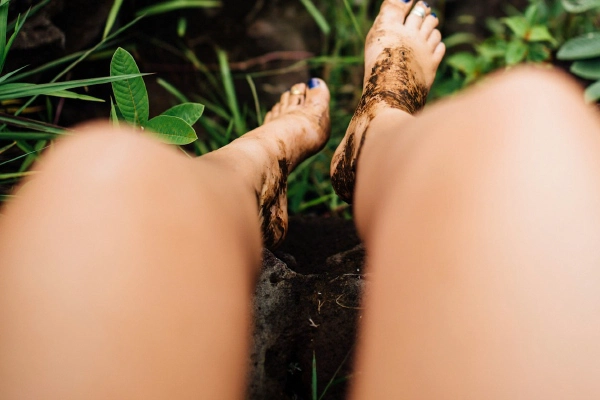
Natural Varied Terrain
Barefoot at Home as a Daily Baseline
Mindful Heel-to-Toe Movement
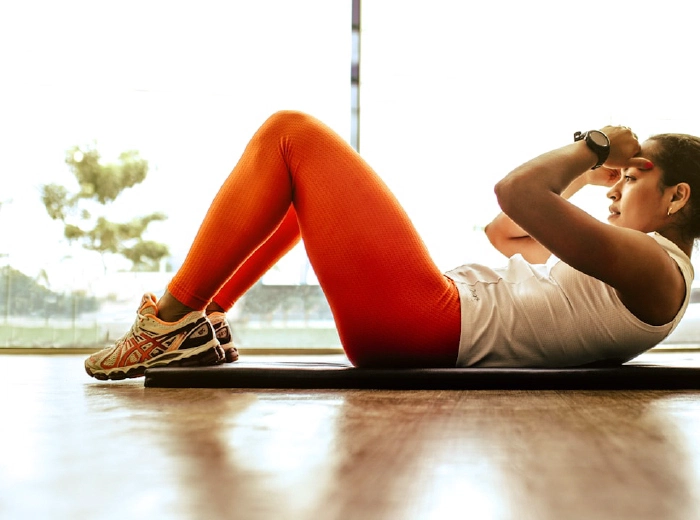
Calf Raises and Foot Strengthening
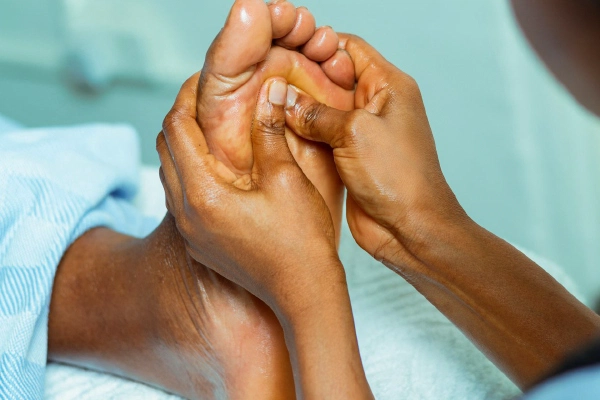
Foot Massage for Drainage
Cool Water Contrast
What about standing desks?
Look, standing desks are better than sitting all day, but only if you’re actually moving while standing. Standing still in shoes is nearly as bad for venous return as sitting, because the calf pump only activates when the calf muscle contracts. If you’re locked upright and still, the pump is idle. If you’ve got a standing desk, go barefoot while you use it, shift your weight, do the occasional calf raise, rock from heel to toe. Movement is the point, not the position.
Barefoot Circulation FAQs
Your feet were built to do this
Your body has a brilliant backup circulation system built right into your lower legs and feet. The calf muscle pump, working together with the plantar venous arch, moves a huge amount of blood back toward your heart with every proper step. And conventional footwear, for all its cushioning and structure, quietly dials that system down by restricting the foot and ankle movement that makes it work.
Going barefoot more, on varied surfaces when possible, at home as a daily baseline always, is one of the simplest things you can do for your circulatory health. It’s not complicated. Your feet know what to do. They’ve been doing it since long before anyone invented an orthotic.
Heavy legs at the end of the day are not just “normal tiredness.” They’re your venous pump asking for more activation. And the answer, quite literally, is to take your shoes off.
Go deeper into the barefoot health world:
- Earthing and circulation: how ground contact may reduce blood viscosity and give your venous return another boost
- Foot strengthening exercises: the specific moves that build the muscles powering your venous pump
- Barefoot at home: the easiest daily habit for keeping your circulation switched on
- Foot massage for circulation: hands-on techniques that directly support venous and lymphatic drainage