Barefoot Across Cultures
Before science had a word for it, before “earthing” was a thing, before anyone wrote a blog post about foot strength, every culture on Earth had already figured it out. Barefoot isn’t new. It’s older than writing, older than cities, older than shoes.
You didn’t discover something weird. You rediscovered something everyone forgot to keep.
When the ground becomes sacred
The very first thing Moses hears at the burning bush isn’t a grand theological statement. It’s a practical instruction: “Take off your sandals, for the place where you are standing is holy ground.” (Exodus 3:5)
That instruction didn’t come out of nowhere. Removing footwear before entering a sacred space is one of the most universal acts in human history. It shows up across religions, across continents, across thousands of years of culture, with almost no cross-pollination between traditions.
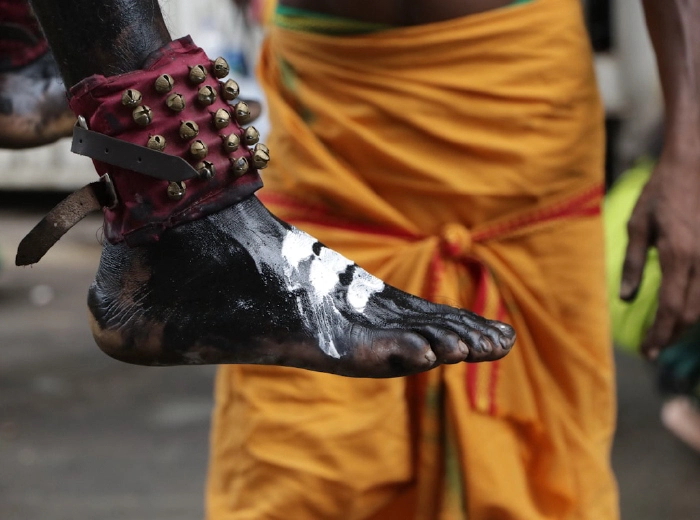
In Hindu temples across India, Sri Lanka, and wherever Hindu communities gather, shoes are left at the door without question. Not as a hygiene rule. As a recognition that the ground you’re entering is different. That something shifts when skin meets that particular earth. Devotees have done this for millennia, and the temples of Tamil Nadu, the ghats of Varanasi, the sacred sites of Bali all operate on the same principle: you arrive fully, or you don’t arrive at all.
In Islam, prayer is performed on a clean mat, but the feet are bare. The ritual washing before prayer includes the feet. The connection between cleanliness, barefoot, and spiritual readiness is built right into the practice. Five prayers a day, barefoot, across nearly two billion Muslims worldwide.
In Shinto shrines in Japan, in Buddhist pagodas across Southeast Asia, in mosques from Morocco to Malaysia, in synagogues during Yom Kippur, in indigenous ceremony houses across the Americas: shoes come off. The earth matters. The contact matters.
What did all these traditions, developed completely independently, somehow agree on?
Bare feet aren’t just practical. They’re a posture. A way of being present that you literally cannot fake.
The religious orders that chose it
In 16th century Spain, a woman named Teresa of Ávila decided to reform the Carmelite order. Her reform included a symbolic act: the sisters would walk barefoot, or in plain sandals. The Discalced Carmelites (“discalced” means unshod) have held to this practice for over 500 years. Same with the Discalced Franciscans, the Augustinian Recollects, and various other religious orders.
The choice wasn’t about discomfort or penance. It was about presence. Simplicity. Staying grounded, literally and spiritually. Teresa wrote extensively about the clarity that came from physical simplicity. Her co-reformer John of the Cross described mystical states that began with letting go of everything that distanced a person from direct experience.
Five centuries before barefoot running became a fitness trend, these women and men understood something about what happens when you remove the barrier between your soles and the earth.
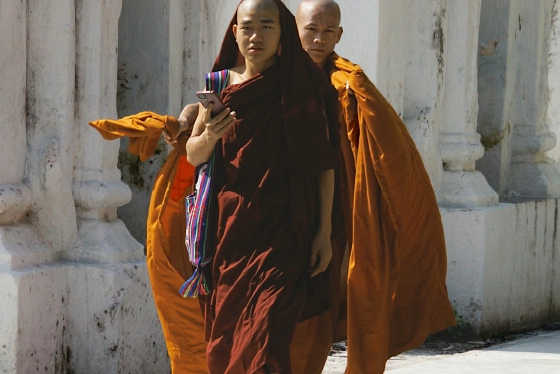
Buddhist monks in Thailand, Myanmar, and across the Theravada world walk barefoot for their morning alms rounds. Not because they can’t afford sandals. Because the contact with the earth is part of the practice. The slow, deliberate barefoot walk is a moving meditation. Every step felt. Every surface noticed. Presence isn’t a side effect. It’s the whole point. There’s more on that in the barefoot mindfulness guide.
The peoples who never lost the connection
The Rarámuri of northern Mexico’s Copper Canyon are famous among endurance athletes for their extraordinary running ability. What gets less attention is that this running culture developed in a landscape where running barefoot, or in thin sandals barely thicker than a slice of leather, was simply normal life. The Rarámuri don’t think of themselves as “barefoot runners.” They think of themselves as people who run. The earth is the track. Their feet are the shoes. Everything else is noise.
Aboriginal Australians have maintained a spiritual and practical connection to land for over 65,000 years, the longest continuous culture on Earth. The concept of “country” in Aboriginal culture isn’t just land you happen to stand on. It’s something you’re in relationship with. That relationship is felt through the body, through feet on specific ground, through the textures and temperatures of particular places. Shoes between you and that ground would be like putting a glove on when someone offers you their hand.
Indigenous cultures across South America, sub-Saharan Africa, and parts of Asia carried similar knowledge. What scientists are now cautiously exploring as earthing and grounding was understood practically and spiritually by cultures that never stopped being in contact with the ground.
They didn’t need a study. They had millennia of lived experience.
What folklore has been trying to tell us
Here’s something that doesn’t get brought up enough. Across British and Celtic folklore, the Brownies, those small benevolent forest spirits who help with household tasks and radiate quiet good energy, are always barefoot. Every single depiction, every story, every folk memory of these creatures shows them moving through the world without shoes. The forest floor isn’t an obstacle for them. It’s home. More than home. It’s the source of what they are.
The Brownies weren’t alone. The Kobolde of German forests. The Lutins of French legend. The Duendes of Spain and Latin America. The Folletti of Italy. Every culture that had forest spirits had barefoot forest spirits. Not one of these traditions ever imagined their magical forest beings in shoes.
Coincidence? We don’t think so. Something in the human imagination understood, across thousands of years and dozens of cultures, that bare feet and forest floors and something-alive-in-the-world belong together. And it kept trying to tell us through the only stories it knew how to tell.
The Brownies were carrying a message. We just took a few centuries to start listening again.
The barefoot meaning guide goes deeper into the spiritual symbolism of going without shoes. What these traditions have in common is that going barefoot is never just physical. It’s always also a kind of saying-yes to the world as it actually is.
Japan: the culture that built barefoot into its architecture
No culture has made barefoot indoor living so architecturally intentional as Japan. The genkan is the entrance area of a Japanese home: a lower surface where outdoor shoes are removed before stepping up into the living space. It’s not a shoe rack. It’s a threshold. The step up from the genkan to the home floor is a physical and symbolic transition from outside-world to inside-world.
This design has been standard in Japanese homes for over a millennium. The floors of tatami rooms, the wooden corridors of temples, the polished surfaces of traditional interiors: all built around bare feet. Not for hygiene alone (though that matters), but because the floor is lived on. You sleep, sit, eat, and work on the floor in traditional Japanese spaces. You have to know it intimately, and you only know it with your feet.
The result: Japanese people have maintained one of the world’s highest rates of indoor barefoot time for centuries. The connection between foot health and indoor barefoot living that we’re now rediscovering with studies and wellness guides? Japan just… never stopped doing it.
What every culture understood, and we forgot
Let’s zoom out and look at what we just described.
Hindu priests. Muslim worshippers. Jewish rabbis on holy days. Carmelite nuns. Franciscan monks. Buddhist meditators. Aboriginal Australians. The Rarámuri. Japanese families for a thousand years. British folklore forest spirits. They’re not connected. They didn’t share notes. Many of them never heard of each other.
And yet every single one arrived at the same understanding: bare feet on particular ground creates a particular quality of attention. Of presence. Of connection.
Sacred Presence
Connection to Earth
Deliberate Simplicity
The modern barefoot movement sometimes gets treated like a fitness quirk or a wellness trend. But looked at through a wider lens, it’s a return. People across cultures and centuries knew something about what happens when feet meet earth. We’re just remembering what that feels like.
The barefoot legends guide shows the athletes and figures who carried this understanding into modern times. The earthing article looks at what science says about the actual mechanism.
Barefoot Cultures FAQs
Your feet already know this
Barefoot living isn’t about rejecting modernity or living like it’s 3000 BCE. It’s about remembering that one of the most consistent findings across human history, through cultures, religions, and traditions that never spoke to each other, is that bare feet on the ground does something. Something worth noticing. Something worth keeping.
You don’t need to believe in any particular tradition to feel what every tradition is pointing at. Just take your shoes off on grass or soil, slow down, and pay attention. Whatever name you give to what happens next, humans have been having that experience for a very, very long time.
It never stopped being available. It just started being forgotten.
Go further into the world of barefoot living:
- What does barefoot mean: the personal spiritual dimension of going without shoes
- Barefoot legends: the figures who carried barefoot knowledge into the modern world
- Earthing and grounding: what science says about bare skin on earth
- Barefoot mindfulness: turning every barefoot step into a meditation
- Barefoot hiking: the most immersive way to experience what these traditions understood
- China’s barefoot doctors: the wildest healthcare experiment in history, and it actually worked
- Barefoot folklore: the folk beliefs, superstitions, and old wisdom that quietly got the science right