Barefoot Dancing
There’s a moment when barefoot dancers talk about, right after the shoes come off, when the floor suddenly becomes something else. Not just a surface to stand on. A conversation partner. Every shift of weight, every grain of wood or stone or earth, talking directly to the nervous system without anyone in the middle.
Dancing was invented barefoot. Shoes came later. And honestly? The feet still remember.
Humans have always danced barefoot
Before ballet slippers, before tap shoes, before any kind of footwear designed for dancing, there were bare human feet on natural ground. Every ancient culture that danced, and that’s every culture that ever existed, danced without shoes. Polynesian hula, African ceremonial dances, the roots of flamenco, ancient Greek choral dance, Native American ceremonies. All bare feet on earth.
This isn’t romantic nostalgia. It’s biology. The human foot has over 200,000 nerve endings and 33 joints that work as a highly sophisticated sensory system. When you add shoe leather between that system and the ground, you’re turning down the volume on the most precise instrument your body has for reading movement, rhythm, and spatial information.
Your ancestors knew this intuitively. The Brownies of British and Scottish folklore, those barefoot forest beings, they danced their way through the woodland at night, connecting to the earth through every step. They weren’t doing it for foot health reasons. They just couldn’t imagine it any other way. Neither could most humans, for most of human history.
Modern dance shoes are a very recent invention. Bare feet on ground? That’s millions of years of evolution telling your body exactly what to do.
What actually changes when your shoes come off
Ask any dancer who has made the transition from shoes to barefoot and they’ll describe a version of the same experience: an almost shocking increase in awareness. Not just of the floor, but of their own body in space.
Here’s why that happens:
Ground Truth
Natural Alignment
Real Grip
Muscle Activation
Freedom of Toes
Deeper Flow
Dance traditions that belong to bare feet
While barefoot dancing enhances any style of movement, certain traditions are deeply rooted in bare-soled practice:
Contemporary Dance and Modern Dance
The modern dance revolution of the 20th century was, in large part, a barefoot revolution. Isadora Duncan, often called the mother of modern dance, scandalized audiences by dancing without shoes and in flowing fabric instead of a corset and ballet slippers. Her argument was simple: the body should move naturally. Shoes weren’t natural. That principle became the foundation of an entire movement lineage.
Contemporary dance classes across the world still treat barefoot practice as the default. The floor is an instrument. Your feet play it.
Flamenco
Here’s something that surprises people: traditional flamenco, before it became the stylized performance art seen on stages, was danced barefoot. The zapateado footwork that defines flamenco, that percussive conversation between feet and earth, originated with bare soles on packed earth and wooden floors of Andalusian taverns. The wooden-heeled zapatos came later, when flamenco moved to larger stages.
Some flamenco practitioners still explore barefoot practice as a way to reconnect with the organic roots of the form, finding a rawness in the unmediated contact that heeled shoes can soften.
African and Afro-Cuban Dance
Virtually all African traditional dance forms, and their descendants in the African diaspora including salsa, samba, and Afro-Cuban styles, are performed barefoot. The direct connection to the earth is not incidental but essential. In many West African dance traditions, the feet striking the earth is itself a form of communication with ancestors and spirits. The ground is sacred. You don’t put anything between yourself and something sacred.
Yoga Dance and Ecstatic Dance
The growing ecstatic dance movement and yoga-inspired dance forms are intentionally barefoot by design. These practices treat movement as a somatic exploration rather than a performance, and the bare foot’s total sensory engagement is central to that experience. Combining this with a regular barefoot yoga practice creates a powerful foundation.
Contact Improvisation
This form of partnered dance, developed in the 1970s, almost always takes place barefoot. The practice involves two or more bodies sharing weight, following impulses, rolling and spiraling together. Shoes would create friction at exactly the wrong moments. Bare feet give the traction and release the practice needs, plus the sensory connection that makes it possible to truly listen to a partner through shared touch.
What barefoot dancing does for your body
Beyond the sensory and artistic benefits, dancing barefoot delivers serious physical payoffs:
- Intrinsic foot strength: The micro-stabilizations required in dance movement, particularly turns and balances, force every small muscle in the foot to activate and strengthen. Over time, this builds the kind of foot resilience that no strengthening routine alone achieves as quickly
- Ankle stability: Dancing barefoot puts your ankles through their full natural range of motion with constant sensory feedback. The proprioceptive training this provides is exceptional for preventing rolls and sprains
- Improved proprioception: Your body’s ability to know where it is in space gets a full workout every session. This translates to better coordination in every physical activity, not just dance
- Natural arch development: The constant loading and unloading of barefoot movement strengthens the arch in a dynamic way. Much more effective than static exercises
- Better balance: The sensory loop from foot to brain operates at full capacity. Balance improvements show up fast, often within a few sessions
- Reduced lower body tension: Without elevated heels altering your gait, calves, hamstrings, and hip flexors operate in better length-tension relationships. Dancers often report a significant reduction in chronic tension once they start barefoot practice
How to bring barefoot into your dance practice
Whether you’re a casual mover or a trained dancer, the transition to barefoot practice works better with some gradual intention behind it:
- Start at home first: Before trying barefoot in a class or studio, spend time dancing freely at home on clean floors. It doesn’t have to be serious, put on music you love and just move. Get your feet used to the information and freedom
- Check your barefoot transition readiness: If you’ve been in shoes your whole life, your foot muscles need some prep. A few weeks of general barefoot time at home makes the transition smoother
- Try it in a class that welcomes it: Contemporary, African, ecstatic dance, and many yoga-based movement classes are already barefoot. Drop into one of these rather than trying to go barefoot in a style that uses shoes (like tap or ballet, where shoes are part of the technique)
- Warm up your feet properly: Toe spreads, foot circles, rolling on a ball, short-foot exercises. Spend five minutes activating before dancing. Your balance and control will thank you
- Listen to what your feet report: Mild soreness in the arches and small muscles of the feet is normal when you start. Sharp pain is not. Take it easy the first few sessions, especially if the floor is hard
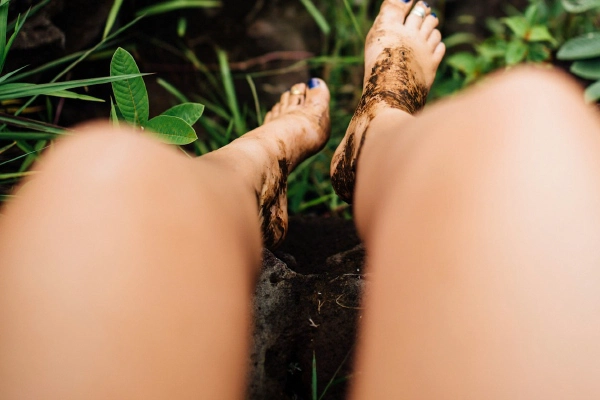
- Explore different surfaces: Wooden studio floor, grass, sand, smooth stone. Each surface teaches your feet something different. Outdoor barefoot dancing, especially on grass or earth, adds an earthy dimension that hard floors simply can’t replicate
When movement becomes ritual
There’s a reason that in so many spiritual and ceremonial traditions around the world, the instruction is to remove your shoes before entering a sacred space. It’s not just respect or symbolism. It’s about total presence. Without the buffer of a sole between skin and earth, you arrive differently.
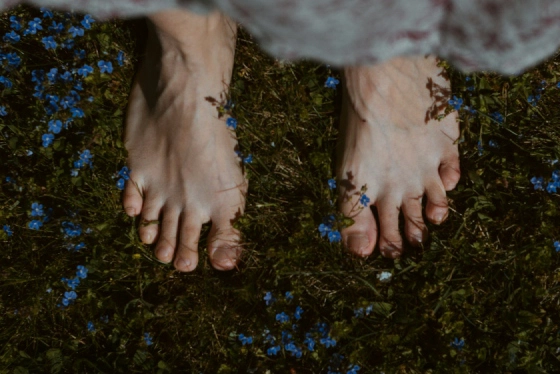
Dancing barefoot carries a trace of this. Something shifts when the floor is no longer just a surface you perform on but something you’re in actual, honest conversation with. Some dancers describe it as a kind of coming home. Their feet were always meant to speak directly to the ground. The shoes were just a long interruption.
This isn’t reserved for professionals or mystics. It’s available to anyone willing to kick off their shoes and let their feet say hello to the floor. Your nervous system will know what to do. It always did.
Barefoot Dancing FAQs
Your feet have been waiting
You don’t need a studio, a teacher, or a particular dance style to try this. You need music, a floor, and the willingness to take off your shoes.
Start in your kitchen. Or your living room. Or on grass in the park. Put something on that makes you want to move and let your feet do what they were built to do: feel the ground, grip it, push off it, land softly on it, slide across it. No rubber in the way. No heel doing the thinking for your whole body.
Your feet have been carrying you everywhere your entire life, mostly in boxes. Give them the conversation they were made for. The floor has been waiting too.
And if you want to build the foundation for this properly, the barefoot transition guide and foot strengthening routine are the best places to start. Then put on your favourite track and make some noise with those bare soles.