Barefoot in the Forest
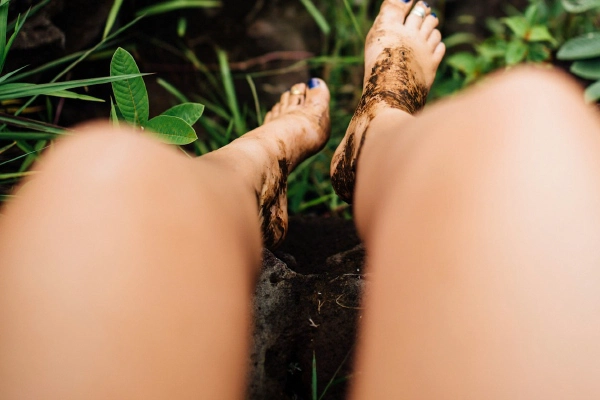
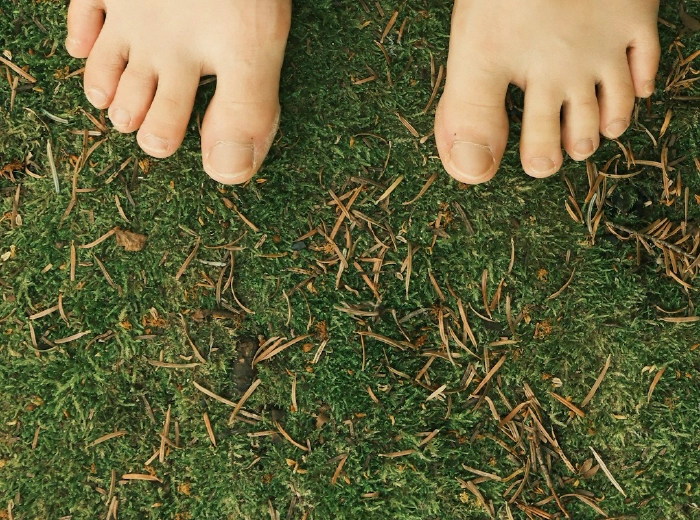
There’s a specific moment that happens to everyone the first time they walk barefoot into a proper forest. The leaves go quiet, the temperature drops a couple of degrees, and then your bare sole lands on something soft and cool and alive. Moss. And something in your brain goes very, very still.
This is what feet were built for. Not pavements, not gym floors. This.
What's actually under your feet in a forest
Most people have never thought about the forest floor as a surface. It’s just “ground,” right? But when you walk barefoot into it, you start to notice that the forest floor is actually a layered, living system with more variety packed into a single step than a whole gym has in its entire floor.
Here’s what you’re walking on, depending on the forest and the season:
- Moss: The soft, springy stuff that feels like a living mattress. Cool to the touch, slightly damp, insanely satisfying. Your foot sinks slightly and the moss cushions every step with genuine tenderness
- Leaf litter: Depending on the season, this ranges from crunchy and dry to soft and slightly fermented, the autumn forest floor smell comes directly from here. Your feet read every layer
- Exposed roots: Nature’s proprioception workout. Stepping over and around roots forces your feet to grip, balance, and adapt in real time. Every step is different
- Bare earth: Packed and firm in high-traffic forest areas, loose and yielding where the trees are denser. The temperature difference between a sunny patch and deep shade can be several degrees under your feet
- Damp undergrowth: Morning dew on low vegetation, after rain the whole forest floor is electrically alive. Best earthing surface you’ll ever find
- Pine needles: Dry pine needle carpets are lowkey one of the most magical barefoot surfaces. Soft, fragrant, slightly abrasive. Your feet remember this one
No sensory trail designer can replicate what a real forest floor delivers. And the forest does it for free, across thousands of acres, and it changes with every season.
Forest bathing and why your nervous system loves it
The Japanese practice of shinrin-yoku, which literally translates as “forest bathing,” has been a recognised wellness practice in Japan since the 1980s. The concept is beautifully simple: slow down, go into the forest, and let your senses soak up the environment. Not hiking, not hitting a step count. Just being in the forest.
Research from Japanese and South Korean scientists has found that time spent in forests, even just sitting in them, produces measurable reductions in cortisol (your stress hormone), blood pressure, and heart rate. Forest air also contains phytoncides: antimicrobial compounds that trees release to protect themselves. When you breathe them in, your natural killer cell activity goes up. Your immune system literally benefits from breathing forest air.
Now imagine doing shinrin-yoku barefoot.
Nervous System Reset
Earthing in the Wild
Proprioception Explosion
The barefoot forest experience, step by step
You want the honest version? Here’s what actually happens when you take your shoes off in a forest.
The first five minutes
Your feet are soft. The ground is unfamiliar. You step carefully. You notice you’re walking differently than you do on a pavement, lower to the ground, more deliberate, testing each step before committing weight to it. This is not a problem. This is your nervous system doing exactly what it was designed to do.
Ten to fifteen minutes in
Something shifts. Your feet start to read the terrain instead of reacting to it. That patch of soft moss? Your brain clocks it before your sole lands. That exposed root? You step around it or over it without needing to look down. Your gait is slowing, your breathing is slowing, your whole internal tempo is dropping to match the forest.
The zone
By thirty minutes in, most people hit something that’s hard to describe unless you’ve been there. A kind of clear, quiet alertness. You’re moving through the world at the forest’s pace, not the city’s pace. Your feet are doing their job properly for the first time in who knows how long. The smell of earth and moss and damp wood is everywhere. You feel genuinely, solidly present.
- The temperature changes with every step: Sunny patches are warm, shade is cool, damp earth has its own microclimate. Your feet read all of it and report back in real time
- The smell comes through your feet, not just your nose: Barefoot walking releases more forest fragrance. Stepping on leaf litter bruises it gently and the scent rises. Pine resin is warmer underfoot than it looks
- Your breathing changes before you notice it: The forest rhythm gets into your respiratory system without announcing itself. You’re slower, deeper, without deciding to be
- Your feet feel more like instruments than tools: Not transport, not support. Actually sensing. That’s the barefoot forest effect at its best

Why forests feel like home underfoot
Humans spent most of their evolutionary history walking barefoot through woodland, on forest paths, riverbanks, and undergrowth that looked a lot like what you’d find in any forest today. The nerve endings in your feet, the proprioceptive system in your ankles and hips, the sensory connections between sole and brain: all of it evolved specifically to handle terrain like a forest floor.
When you walk barefoot in the forest, you’re not doing something unusual or extreme. You’re doing something your body has been waiting to do. The forest floor is the surface your feet were literally designed for, and when you finally put them on it, some part of your body recognises the match immediately.
The Brownies figured this out before anyone gave it a name. Those bare-footed woodland folk who pad silently through moss and root and pine needle, tending to small forest things, are just doing what feet have always done best: reading the forest, step by step, in full contact with the earth. They don’t talk about it. They just walk. And the forest knows their feet.
Getting started with barefoot forest walking
Forest barefoot walking is one of the most accessible forms of barefoot practice, but it does reward some preparation, especially if your feet have been living in shoes for years.
Pick the right forest
Not all forests are equal for barefoot walking. What you want:
- Deciduous woodland with leaf litter and moss is usually softer and more varied than conifer plantations
- Well-established paths that have compacted earth rather than gravel or sharp stone chippings
- Managed woodland where fallen branches are cleared and the undergrowth is not overgrown. You want to see where you’re stepping
- Damp but not waterlogged: After light rain is the best time. Saturated mud is less fun. Morning dew is perfect
Build your forest feet gradually
If you’re new to barefoot walking outdoors, a forest trail is not the first step. Spend a few weeks walking barefoot at home, then on grass, then on packed earth paths, before tackling a proper forest floor. The barefoot transition guide breaks this out properly.
When you do start, keep your first forest sessions short: fifteen to thirty minutes on well-maintained paths. Your soles need time to build up their natural toughness and your ankles need time to build the stabilising strength that uneven ground demands.
What to look out for
The forest floor is mostly very safe for barefoot walking, but it’s not a managed sensory trail. Things worth watching for:
- Broken branches with sharp points. Walk slowly and scan ahead rather than looking only at your feet
- Hidden stones under leaf litter. The surprise factor is real. Slow down especially in autumn when leaves hide what’s underneath
- Thorny undergrowth that might cross a path. Learn to recognise brambles by sight before your feet find them
- Wet roots after rain. Slippery in a way that’s not immediately obvious. Step on them slowly and deliberately
When to go barefoot in the forest
One of the things that makes barefoot forest walking genuinely special is how dramatically the experience changes across the year. Each season gives your feet a completely different read of the same ground.
Spring
Summer
Autumn
Winter (for the brave)
Barefoot Forest Walking FAQ
Go find a forest. Take your shoes off.
Barefoot forest walking is the kind of thing that sounds slightly eccentric before you try it and feels completely obvious after. Your feet on a forest floor is not a weird wellness experiment. It’s the most natural thing in the world. The forest floor has more sensory variety than any designed surface. The air has phytoncides and oxygen. The ground has that earthing charge. And there’s something alive and old in the silence between the trees that responds when you arrive with bare feet and slow steps.
You don’t need special training, special equipment, or special anything. You need a forest, a dry-ish day, and the willingness to take your shoes off at the treeline.
Go deeper from here:
- Earthing: the science behind what forest floor contact does to your nervous system
- Barefoot mindfulness: turning barefoot forest walks into a full presence practice
- Barefoot hiking: the next level after forest walking, longer trails, bigger terrain
- Barefoot on natural ground: the full guide to all natural surfaces and what each one gives you