Barefoot Meaning
At some point, practically every human tradition that has ever existed decided that bare feet mean something. Not just “no shoes.” Something deeper. Something about who you are, where you stand, how you connect.
Turns out, barefoot has always been a language. Your soles just speak it fluently.
Why barefoot carries so much meaning
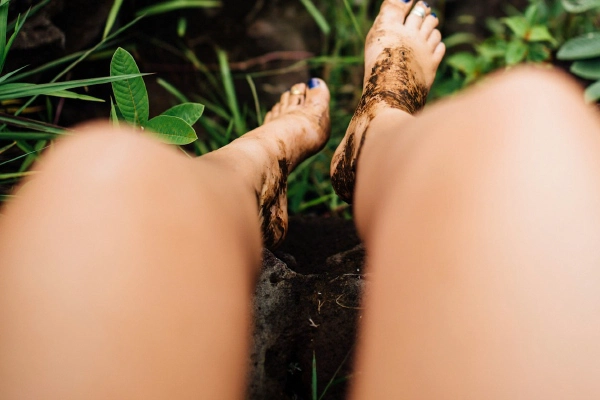
Strip away the health benefits for a second. Forget the stronger arches and the better proprioception. Just sit with the raw idea: bare feet on ground. No barrier. Skin meeting earth.
That image shows up everywhere. In sacred spaces, in spiritual traditions, in poetry and dreams and mythology. Every culture that has ever existed has its own barefoot symbolism. That’s not a coincidence.
Here’s what most of these traditions have in common:
- Barefoot means presence. You cannot ignore the ground when you’re on it with bare feet. You feel every pebble, every temperature shift, every change in texture. It’s the physical equivalent of paying full attention
- Barefoot means humility. Not the false kind. The real kind, where you acknowledge you are small and the earth is vast and that’s actually a beautiful arrangement
- Barefoot means openness. Like you’ve dropped a layer of protection, and that’s okay. You’re trusting the ground beneath you
- Barefoot means authenticity. There’s something about shedding your shoes that feels like shedding a role. Just you, just the earth, no performance
That’s a lot of weight for a simple act of taking your shoes off. But there it is.
What it means to dream about being barefoot
Here’s something that genuinely surprises people: dreaming about being barefoot is wildly common. And across almost every culture that studies dreams, it carries remarkably consistent symbolism.
Being barefoot in a dream almost never means you forgot your shoes. It usually points to one of these:
Freedom or escape
Vulnerability
Connection to truth
Grounding and stability
Spiritual readiness
Naturally, context matters. Running barefoot in panic feels different from walking barefoot in a garden at dawn. But the through-line across most interpretations is the same: something honest is happening.
Barefoot on holy ground: the ancient tradition
The Bible doesn’t mess around on this one. Moses at the burning bush. Joshua before Jericho. Isaiah walking barefoot for three years as a prophetic sign. In every case, bare feet on sacred earth meant one thing: you are standing in the presence of something greater than yourself. You don’t bring your usual protections here.
That instruction “remove your sandals, for the place where you are standing is holy ground” echoes through centuries of religious practice. Not just in Christianity, but in traditions across the world that all arrived at the same conclusion independently.
- Buddhism: Shoes come off before entering any temple, any meditation space, any place of teaching. The logic runs deep: the ground where wisdom is shared becomes sacred. You don’t insulate yourself from it
- Islam: Shoes are removed before prayer, before entering the mosque. The same principle. You’re about to do something real. Come as you are
- Hinduism: Temples are always entered barefoot. The earth within the temple grounds carries the energy of what has happened there. You receive it through your feet
- Shinto (Japan): Certain shrine areas, particularly inner sanctuaries, are entered barefoot. The foot-earth connection is understood as participation, not just proximity
- Indigenous traditions globally: Across continents, the earth is understood as a living entity. Walking barefoot on it isn’t symbolic. It’s the actual conversation
The Carmelite religious order, which famously goes by “Discalced” (barefoot or sandalled), carries this tradition into everyday monastic life. To live barefoot is to live in a constant state of readiness, simplicity, and presence. That’s not a small thing to hold onto in daily life.
Even if you’re not religious, the pattern is striking. Virtually every tradition that has thought carefully about the sacred concluded that shoes get in the way.
The people who chose to go barefoot and what it meant
Throughout history, going barefoot has sometimes been a choice that meant something publicly.
Abebe Bikila ran the 1960 Olympic marathon in Rome barefoot. He won. Set a world record. Became a legend. His barefoot running was not an accident or a lack of resources. It was a statement about what the human body can do when it’s not overbuilt or overthought.
Mahatma Gandhi walked barefoot as part of his philosophy of living simply and staying connected to the ground of his own country. The image is inseparable from the message.
Nelson Mandela’s years of farming on Robben Island, often in bare feet. A kind of forced simplicity that he later reflected on as something that kept him grounded (quite literally) through unimaginable circumstances.
These aren’t people who forgot their shoes. They’re people who understood what going without them communicated.
What being barefoot says that words can't
There’s something that happens when you take your shoes off in a place that matters to you. A favourite patch of garden. The trail you walk when you need to think. The grass at the park where everything finally slows down.
The air changes. Your pace changes. You stop crossing the place and start actually being in it.
That’s what barefoot means at its most honest. Not a wellness practice. Not a lifestyle brand. Just: here. Now. This ground. These feet. This moment.
The meaning was always there. You just had soles between you and it.
Read more about earthing to understand what happens when that connection is made electrically. Or go deeper into barefoot mindfulness to explore how walking barefoot changes the way your mind settles. And if you want to find the places in Europe that were specifically built for this exact experience, the barefoot parks guide is the place to start.

Barefoot meaning: your questions answered
Your feet already know
Here’s what all of this adds up to: the meaning of barefoot has been consistent across thousands of years of human culture. It means presence. It means honesty. It means dropping a layer of protection and trusting the ground beneath you.
Every time you take your shoes off and step onto something real, you’re participating in that tradition. You might not be standing on holy ground in the biblical sense. But you are standing on the earth. That’s not nothing. That’s actually everything.
The Brownies of British folklore, the Kobolde of German legend, the Folletti of Italy, the Duendes of Spain, the Lutins of France. They all walk barefoot, all the time, through all terrains. Not because they lack shoes. Because they understand what happens when you let your feet read the world directly.
Your soles have been trying to tell you the same thing.
- Barefoot legends: the greatest barefoot figures in history, from Olympic gold to music stages
- The barefoot philosophy: why this isn’t just a wellness practice but a full worldview
- Earthing explained: the science behind what happens when bare skin meets earth
- Barefoot mindfulness: how walking barefoot changes your mind, not just your feet
- Barefoot hiking: taking the meaning out onto the trail where it belongs
- Barefoot at home: the easiest way to start the conversation with your own ground
- Barefoot dreams: the full deep dive into what barefoot dreams mean, across psychology and cultural traditions
- Barefoot across cultures: the full global history of barefoot wisdom, from temples and monks to forest spirits