Barefoot Myths
The moment you tell someone you walk barefoot, or even just wear minimalist shoes, you get hit with an avalanche of unsolicited concern. “You’ll ruin your arches!” “You’ll get sick!” “That’s so dangerous!” “You NEED support!”
Spoiler: most of it is wrong. Let’s sort fact from fiction.
Buckle up (or rather, unbuckle those shoes). Myth-busting time.
You need arch support
This is THE big one. The shoe industry has spent decades convincing us that our arches need external support to function. Let’s break this down:
The Myth
Without arch support, your arches will collapse, leading to flat feet, pain, and problems throughout your body.
The Reality
Your arches are held up by MUSCLES. Specifically, intrinsic foot muscles like the abductor hallucis, flexor digitorum brevis, and others you’ve never thought about because they do their job automatically, IF they’re allowed to work.
When you put arch support under your feet, those muscles stop working. They don’t need to support anything because the insert is doing it for them. Over time, they weaken. Weaker muscles = weaker arches = “needing” more support. See the cycle?
It’s like putting your arm in a sling and then being surprised your arm is weak when you take the sling off. The support caused the weakness, not the other way around. The fix is foot strengthening exercises that rebuild what atrophied, not more support that keeps it weak.
The Exception
People with legit structural issues (not just weak arches) may benefit from temporary support while they build strength. Key word: TEMPORARY. The goal should always be getting stronger, not staying dependent forever.
Going barefoot is dangerous
The Myth
Walking barefoot means you’ll step on glass, get infections, catch parasites, and generally destroy your feet.
The Reality
Barefoot walking has risks, just like everything else in life. But they’re WAY overblown:
You Watch Where You Step
Your Soles Toughen Up
Injuries Are Rare
Common Sense Applies
Cold floors will make you sick
The Myth
Walking barefoot on cold floors gives you a cold, the flu, or some other illness.
The Reality
Viruses cause colds and flu. Not cold floors. Not cold weather. Not bare feet. This myth has been nuked so many times by so many studies that it’s honestly embarrassing it still exists.
The confusion comes from correlation: cold weather = flu season. People go barefoot less when it’s cold. So they connect warm feet with health and cold feet with sickness. But what’s actually happening is cold weather drives people indoors, where viruses spread more easily in tight spaces. Cold feet are totally innocent bystanders.
If anything, brief cold exposure on your feet can BOOST immune function by stimulating circulation and triggering beneficial stress responses. But we can’t make medical claims, so let’s just say: no, your cold kitchen floor is not going to give you pneumonia. We go deep on this one in the dedicated cold floors article: the full science, the cultural history, and why every culture on earth has their own version of this exact myth.
People with flat feet can't go barefoot
The Myth
Flat feet are broken feet. They need constant support and should never go without shoes.
The Reality
Most “flat feet” are simply WEAK feet. The arches are flat because the muscles that hold them up have atrophied from years in supportive shoes. It’s circular logic: wear support because feet are flat, feet stay flat because of the support.
Going barefoot is often the BEST thing for flat feet. Walking on varied natural terrain, grass, pebbles, sand, rocks, forces those intrinsic foot muscles to wake up and get strong. Tons of people with “flat feet” develop visible arches after months of consistent barefoot practice and exercises. There’s a whole deep-dive into flat feet and what to actually do about them if this one resonates.
The Distinction
There’s a difference between flexible flat feet (arches that appear when you stand on tiptoes, these are just weak and can be strengthened) and rigid flat feet (structural issues where the arch never appears, genuinely different anatomy). The first type benefits enormously from barefoot living. The second type may need professional guidance, but can still often benefit from gentle barefoot practice.
More myths demolished
Only Hippies Go Barefoot
Modern Shoes Protect Your Feet
Kids Need Rigid Shoes
You Can't Run Barefoot
Bare Feet Are Unhygienic
You'll Get Parasites
What about broken glass?
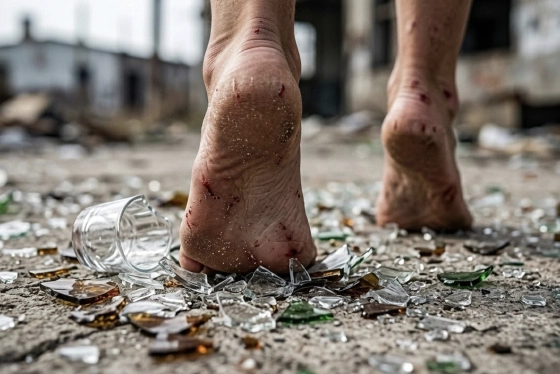
This is the one everyone throws at you. “But what about GLASS?” Like broken glass is just laying around everywhere waiting to ambush your feet. Here’s the reality: in years of barefoot walking, most of us have stepped on glass exactly zero times. Why? Because you LOOK where you walk when you’re barefoot. You develop this natural awareness that shoe-wearers never have.
And even when there IS glass around? Your toughened soles handle small shards way better than you’d think. We’re not saying go dance in a pile of broken bottles. We’re saying the glass boogeyman is massively overblown. Your eyes and your skin are a better defense system than any shoe sole.
Myth-Busting FAQs
Question everything you've been told
Most barefoot myths exist because they serve the shoe industry or because “everyone knows” them without anyone actually checking the facts. When you look at the evidence, the biomechanical research, the studies on barefoot populations, the evolutionary biology, the picture is crystal clear: human feet are incredible structures that work best when they’re allowed to actually work.
You don’t need to convince anyone. You don’t need to argue at dinner parties. Just try it yourself. Take your shoes off. Walk on some grass. Feel the ground. Let your toes spread. See how your body responds.
Your feet already know what to do. They’ve been waiting for you to let them.
Ready to go further:
- Why barefoot is actually good for you: the honest, evidence-backed case for going shoeless more
- Barefoot transition guide: how to start without blowing up your feet
- Foot strengthening exercises: rebuild what years of shoes took away
- Flat feet: the real story: why most “flat feet” are actually fixable
- Barefoot kids: what really happens when children go shoeless
- Barefoot running: the full guide to running the natural way