Barefoot Parks and Sensory Trails
Somewhere in a German city park right now, someone is walking barefoot over a path of pebbles, pine cones, water channels, and sand. In the Alsace region of France, families take their shoes off at the trailhead and don’t put them back on until they’ve walked an entire forest loop. In South Tyrol, Italy, a mountain path has been designed specifically for bare feet, with different textures at every turn.
These places exist. They’re free or nearly free. And most people have no idea they’re there.
What exactly is a barefoot park?
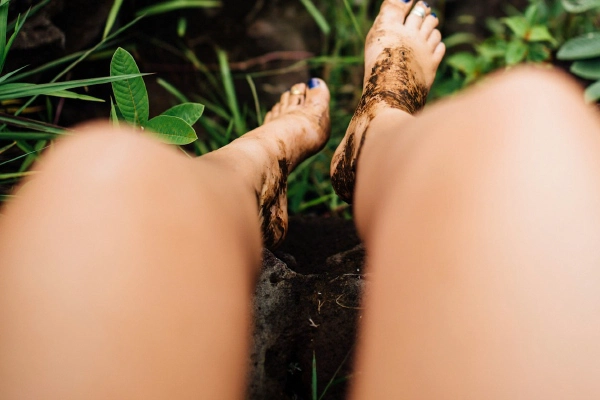
A barefoot park, sensory trail, or sensory path is exactly what it sounds like: a dedicated route where you take your shoes off and walk across a sequence of different natural surfaces. The whole point is variety. Pine cones. Gravel. Cold water channels. Soft mud. Warm sand. Smooth stones. Springy moss. Cut grass. Your feet get a full sensory buffet in a single walk.
The Germans called them Barfußpfade (barefoot paths) or Barfußparks, and they basically invented the concept in the 1990s. A Bavarian health resort set up one of the first ones as part of a therapeutic walking program. It took off. Today Germany has hundreds of them, in city parks, health resorts, nature reserves, and alongside mountain streams.
France picked up the idea and ran with it too, calling them sentiers pieds nus (bare-feet trails) or parcours sensoriels (sensory routes). Italy followed with percorsi sensoriali a piedi scalzi, especially in the Alps and national parks. The concept spread because it works: walking barefoot on varied natural terrain is one of the best things you can do for your feet, your balance, and your head.
Why does it feel so different from just walking barefoot?
Because a sensory trail is designed with intention. Instead of random outdoor terrain, you get:
- Deliberately varied surfaces, moving from soft to hard, smooth to textured, warm to cold, dry to wet in a single continuous walk
- Safe, curated terrain, so you know what’s coming even if your feet don’t, no hidden glass or metal
- Progressive challenge, usually starting gentle and building to more intense surfaces as you go
- Space to go slow, these paths are made for walking mindfully, not racing through
Think of it as a foot gym that doesn’t look like a gym. The setting is nature. The equipment is the ground itself.
What actually happens to your feet on a sensory trail
Every different surface on a barefoot path talks to a different part of your foot. And your feet have been starving for this kind of conversation.
Your soles have around 200,000 nerve endings, which makes them one of the most sensorially dense parts of your body. They evolved to read terrain. Rocky, sloped, soft, hard, wet, dry: your feet process all of it and feed it directly to your brain, which uses that information to adjust your balance, your gait, and your proprioceptive awareness of where you are in space.
Modern life gives your feet one surface. Flat. Smooth. The same. Every day.
Proprioception Boost
Intrinsic Muscle Work
Reflexology For Free
Beyond the foot health benefits, there’s the earthing effect: direct skin-to-earth contact during the walk means your body connects to the earth’s natural electrical charge. It’s not magic, it’s physics. And on a natural sensory trail through a forest, you get it in abundance. The Brownies, those legendarily barefoot forest folk who’ve been padding through moss and stone since before anyone thought to give it a name, would tell you the path already knows what it’s doing. You just have to show up without shoes.
Where to find barefoot parks in Europe
The good news: there are way more of these than you think. The bad news: they’re not always easy to Google because the naming is inconsistent. Here’s where to look by country.
Germany: The Barfußpark Capital of Europe
Germany didn’t just invent the concept. They went all in. You’ll find dedicated barefoot paths in city parks, health resorts, lake shores, and mountain valleys.
- Hamburg Stadtpark Barfußpfad: Right in the city, a proper barefoot loop with different surface zones. No excuses about being too urban to find nature.
- Beelitz-Heilstätten (Brandenburg): Near Berlin, the famous barefoot path at the historic Beelitz healing facilities. Atmospheric setting, excellent varied terrain.
- Bad Sobernheim (Rhineland-Palatinate): One of Germany’s oldest dedicated barefoot parks, with a particularly thoughtful layout of surfaces including clay, water, and forest floor sections.
- Bavaria: Dozens of smaller barefoot paths alongside streams, in spa towns (Bad Aibling, Bad Reichenhall), and in the Bavarian Alps. The concept fits the German spa culture perfectly.
Search tip: “Barfußpfad + [city or region]” on Google Maps will find most of them.
France: The Sentiers Pieds Nus Scene
France took the idea in a more poetic direction. Their barefoot trails tend to run through forests and alongside streams, often in gorgeous mountain or countryside settings.
- Sentier Pieds Nus du Lac Blanc (Alsace): Near the stunning Lac Blanc lake, this is probably France’s most famous barefoot trail. The setting is extraordinary.
- Sentier Pieds Nus de Montgaillard (Hautes-Pyrénées): In the Pyrenees foothills, a well-maintained sensory path with a variety of natural textures.
- Sentier Pieds Nus du Vallon (Var, Provence): Mediterranean setting, different energy. Pine needles, warm stone, red earth.
- Multiple parcours sensoriel in Alsace: The Alsace region has committed hard to barefoot walking culture, several spots in the Vosges mountains alone.
Italy: Percorsi Sensoriali a Piedi Scalzi
Italy’s barefoot paths tend to be embedded in the alpine north, though the concept is spreading south.
- Sentiero a Piedi Scalzi di Racines/Ratschings (South Tyrol): The flagship Italian barefoot trail. Set in the alpine landscape of South Tyrol, with a variety of mountain surfaces that would make any barefoot enthusiast emotional.
- Percorso Sensoriale in the Dolomites area: Several smaller sensory paths around the Trentino-Alto Adige region, often associated with wellness tourism.
- Tuscany and Umbria: Agriturismo culture has led to smaller sensory garden paths on farms and nature reserves. More intimate, less structured than the alpine version.
UK and Ireland
Honestly? The dedicated barefoot park scene is still developing. But that doesn’t mean there’s nothing.
- Forest school sites: Many forest school venues have sensory path elements, often available to the public for certain sessions.
- National Trust properties: Some nature estates have areas designed for mindful nature connection, occasionally with barefoot walking routes.
- Your local park: The UK has excellent green space. It just lacks the dedicated path infrastructure. But a good park with grass, gravel paths, and a sandpit is essentially a DIY sensory trail.
Spain and Portugal
The dedicated barefoot sensory trail concept is just beginning to land in the Iberian peninsula. But the terrain is exceptional, and you don’t need signposts to walk a forest barefoot.
- National parks with forest paths: Many Spanish national parks (Ordesa, Picos de Europa, Garajonay in La Gomera) have forest trails where barefoot walking is a completely natural choice once you’re off the main paths.
- Galicia’s coastal paths: The Rías Baixas area has stunning natural terrain and a culture of sea and earth connection that makes barefoot walking feel completely at home.
- The future: Spain is developing its own version of sensory tourism. The term “sendero sensorial descalzo” is starting to appear. Watch this space.
What your first barefoot park visit is actually like
Here’s the thing nobody tells you: the first few minutes of a sensory trail are almost always uncomfortable. Your feet are soft, the pebbles are unforgiving, and you’re suddenly very aware of every single stone. This is not a sign to stop. This is the sign that it’s working.
Most sensory trails start with gentler surfaces and build to more intense ones, so if you push through the opening pebble section, you usually get rewarded with soft grass, cool water, or springy wood chips on the other side.
What to expect overall:
A complete walk typically takes 30-60 minutes, though many people go slower and take longer. A warm-up section of grass or wood chips usually opens the trail. The centrepiece surfaces tend to be pebbles, stones, or mud, the ones that feel most intense. Water features (channels, pools for your feet) are common and brilliant for circulation. Most trails end with something soft and pleasant, like sand or smooth grass, a reward for your feet after the hard work.
Bring a small towel or packet of wipes to clean your feet before putting shoes back on. That’s about all you need.
How to find barefoot trails near you
The naming is the main problem. Different countries call them different things, and they don’t always show up on standard park maps.
Search Terms That Work
Google Maps Trick
Barefoot Community
And the DIY option always works: find any forest, park, or green space with varied terrain. Grass, gravel path, maybe some exposed roots. Take your shoes off and walk slowly. You’ve made your own sensory trail. The concept is designed by nature, not by park authorities.
What happens after your first sensory trail
People who visit barefoot parks once almost always go back. The reason is simple: it works. Your feet feel noticeably different for hours after a good sensory trail walk. More awake. Less tired. Better connected to whatever you’re standing on.
And then you start noticing sensory trail opportunities in everyday life. That gravelled footpath in your local park. The section of lawn that’s slightly uneven. The stretch of beach with a mixture of sand and smooth pebbles. Your feet, once they remember what varied terrain feels like, start craving it.
That’s the real gift of a barefoot park. Not the specific walk itself, but the recalibration it triggers. The moment where your feet go from passive transport tools to active, sensing, alive things.
Barefoot mindfulness takes this a step further: turning every barefoot surface into a meditation. And barefoot hiking brings the same sensory richness to longer trails in proper nature. But a sensory park is the perfect first step, safe, designed for the purpose, and usually not far from where you live.
Barefoot Parks FAQ
Your feet have been waiting for this
Barefoot parks and sensory trails are one of the best ideas in outdoor wellness that most people have never heard of. They exist across Europe in numbers that will surprise you. They cost little or nothing. They do things for your feet, your balance, your nervous system, and your stress levels that are genuinely hard to replicate any other way.
The concept is simple: take your shoes off and let the ground do what the ground has always done. Talk to your feet. Challenge them. Wake them up. The trail surfaces do the rest.
You don’t need to be a hardcore barefoot walker to enjoy a sensory trail. You just need to show up, take your shoes off at the entrance, and trust that your feet know more than you’ve been giving them credit for.
Start here, then go deeper:
- Earthing and grounding: the science behind what happens when your feet meet the earth
- Walking on different surfaces: understanding why variety is so powerful for your feet
- Barefoot hiking: taking the sensory trail experience to full trails in nature
- The barefoot transition guide: if you want to take this further into everyday life