The Barefoot Philosophy
There’s a question that keeps coming up, and it’s bigger than it sounds: why do some people genuinely choose to go without shoes? Not because they forgot them. Not as a wellness trend they’re trying for a month. But as a real, deliberate way of moving through the world.
That question has a philosophy behind it. And it’s been around a lot longer than barefoot running shoes.
A practice or a perspective?
Most people think barefoot is about the physical act: take shoes off, walk around, get stronger feet. And yeah, that’s part of it. But the people who stick with it long-term? They’ll tell you it shifted something else. Not just their feet. Their relationship with the ground beneath them.
That’s where the philosophy comes in.
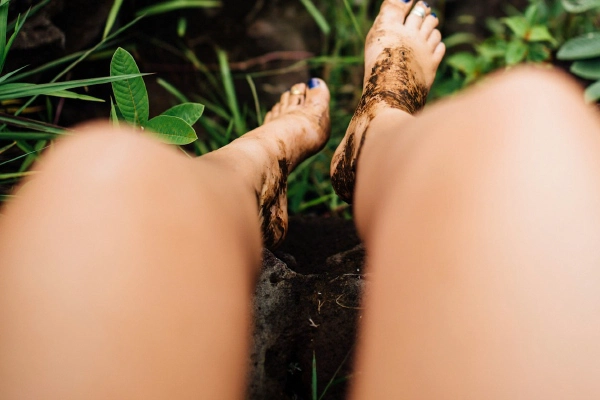
The barefoot philosophy, at its core, is this: less between you and reality equals more contact with what’s actually real. Shoes aren’t just foot protection. They’re a layer of insulation between your nervous system and the world. Take that layer away, and suddenly you’re getting information the ground has been trying to send you all along. Every pebble. Every temperature shift. Every change in terrain. Your feet have been trying to read all of it. You just had too much rubber in the way.
This sounds simple. It isn’t. Because once you start applying that logic to shoes, you start applying it to other things too. What else in your life is extra insulation that you thought was protection?
- Presence: when you’re barefoot, you can’t zone out. The ground demands your full attention. Every step is a choice
- Honesty: there’s no editing what your feet feel. The terrain is what it is. You respond to what’s actually there, not what you expected
- Simplicity: the body already has everything it needs. Your foot is a masterpiece of engineering that’s been outsourced to foam and rubber. Taking the outsourcing back is a return to something that was never broken
- Connection: the earth isn’t a surface to cross. It’s a place to be. Barefoot is just the clearest way to remember that
The long history of barefoot thinking
Thoreau walked barefoot in the woods around Walden Pond and wrote a whole book about what happens when you subtract comfort and add reality. He wasn’t talking about feet, exactly. But the principle was the same: strip back the unnecessary and see what’s actually there.
That impulse has been around forever. Every tradition that took spiritual life seriously landed in the same place: shoes off.
Sacred Traditions
The Nature Movement
Modern Minimalism
The thread running through all of it is the same: voluntary simplicity reveals something that complexity hid. Take the protection away and you find out what was always underneath.
What the barefoot worldview actually changes
The barefoot philosophy doesn’t require you to throw your shoes in the bin and hike mountains in bare feet by next Tuesday. That’s not the point. It’s a compass, not a prescription.
What it does change is how you pay attention.
- You start noticing surfaces: the difference between cold kitchen tiles and warm wooden floors, between dewy morning grass and dry summer earth. Surfaces that were just “floor” become a whole sensory vocabulary
- You start questioning defaults: if your shoes are stopping your feet from working, what else are your defaults stopping? This is uncomfortable but productive
- You start respecting slowness: barefoot walking is almost always slower walking. You look down. You step deliberately. Speed becomes optional in a way it wasn’t before. That slowness leaks into other things
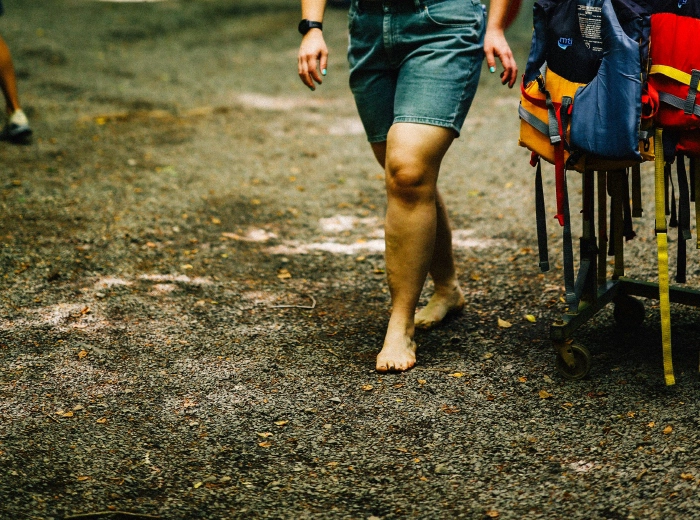
- You start trusting your body more: when you discover that your feet can handle gravel, rough stone, and uneven forest paths without collapsing, the category of “things my body can handle” quietly expands
The earthing connection is real here too. Your feet on natural ground aren’t just sensing texture. They’re making actual electrical contact with the earth, which has its own effect on how you feel. The philosophy and the physics are pointing the same direction.
The Brownies already figured this out
Here’s the thing about the Brownies of British and Scottish folklore: they never philosophised about going barefoot. They just never wore shoes. The forest floor was just the floor. Every root and stone was just part of the conversation.
The Magikitos carry the same energy. They’re not barefoot because they read a study or followed a lifestyle trend. They’re barefoot because it’s the only way that makes sense. Their feet are tuned into the earth the way a musician is tuned into sound. It’s not an ideology. It’s just how they move.
That’s actually the best version of the barefoot philosophy: the one where you stop calling it a philosophy and just live it. The point was never to have an opinion about shoes. The point was to feel the ground.
Explore what this feels like in your own head at barefoot mindfulness, where the practice of barefoot walking becomes a full sensory meditation. Or trace how every civilisation landed in the same barefoot wisdom at barefoot cultures.
Why this philosophy lands differently right now
Here’s the thing about this particular moment in history: we’ve never been more insulated. From weather, from physical effort, from other people’s opinions, from discomfort of any kind. Every friction point has a solution, every unpleasant sensation has an app. We’ve built a world that very successfully keeps us from feeling things.
And then we wonder why so many people feel nothing.
The barefoot philosophy is a small, deliberate act of reversal. Not anti-technology, not anti-comfort. Just a choice to let one specific input through unfiltered. The ground. What’s actually under your feet. What the earth is actually like today.
There’s something almost political about it in 2026. Not in the grand sense. In the small, personal sense. The sense where you decide that you’d rather feel one real thing than not feel a hundred managed things.
The Disconnection Problem
Sensation as Information
This is also why the barefoot meaning goes so much deeper than health tips. Cultures throughout history understood that bare feet on the ground meant something was real. Not symbolic. Not spiritual performance. Real contact with real earth.
The philosophy doesn't require you to be weird about it
The quickest way to kill a good philosophy is to make it a rule system.
The barefoot philosophy isn’t about judging people who wear shoes. It’s not about suffering through gravel when you’d rather enjoy a walk. It’s not about refusing to wear footwear at a restaurant, at a hospital, or in a snowstorm. That’s just stubbornness dressed up as principle.
What it IS about is a direction. More direct contact when you can. More time on natural surfaces. More willingness to feel what’s actually under your feet instead of what you’ve projected onto it. Even small doses of that changes something.
Most people who live this philosophy wear shoes regularly. They just wear them differently: consciously, temporarily, with full awareness that their feet are capable of much more than they’re usually asked to do. And when they can take the shoes off, they do.
That’s it. That’s the barefoot philosophy. No manifesto required.
Barefoot Philosophy FAQ
Take your shoes off. Then figure out what that means to you.
The barefoot philosophy doesn’t ask you to sign anything. It just suggests that the ground beneath your feet has been trying to tell you something, and maybe you’ve had too much rubber between you and it for too long.
Take your shoes off somewhere that matters to you. Walk slowly. Feel what’s actually there. See what changes.
It might just be feet on grass. Or it might be the beginning of something that rewires how you move through the world. Both are fine. The Brownies would say: the ground will take it from here.
Go deeper:
- Barefoot mindfulness: turning every barefoot step into a full sensory meditation
- Earthing explained: the physics of what happens when bare feet meet real ground
- What barefoot means: the deep symbolic language your soles have always spoken
- Barefoot across cultures: every civilisation that ever lived on this earth figured this out
- Barefoot at home: the easiest place to start living this philosophy, starting tonight