Barefoot During Pregnancy
Everyone has an opinion about what pregnant women should or shouldn’t do. Walk barefoot? “You’ll catch cold!” Walk barefoot outside? “Too dangerous!” Walk barefoot on tiles? Your grandmother has some very strong feelings about this.
Here’s what the evidence actually says. Spoiler: your feet are going to thank you.
What pregnancy actually does to your feet
Pregnancy changes everything, and your feet are not exempt. Here’s what’s actually happening down there:
The Big Four Changes
- Oedema (swelling): Fluid retention during pregnancy is normal and very common. Your blood volume increases by about 50%, your body is producing extra fluid, and gravity being gravity, a lot of it ends up in your ankles and feet. This is why your feet can feel like they belong to someone else by the end of the day
- Arch flattening: The hormone relaxin, which loosens your joints and ligaments to prepare your pelvis for birth, doesn’t stop at the pelvis. It affects your whole body, including the ligaments that support your foot arches. Many pregnant women notice their feet getting wider and flatter, sometimes permanently
- Shifted centre of gravity: As your belly grows, your centre of gravity moves forward. Your feet and ankles work harder to compensate. Your balance changes in ways you might not notice until you try to navigate stairs or uneven ground
- Heightened sensitivity: Nerve compression, swelling, and the general rewiring that pregnancy does to your body often makes feet more sensitive than usual. Some women find this uncomfortable. Others find barefoot walking actually helps
None of this is a reason to panic. It’s just your body doing something extraordinary and your feet being honest about it. The question is: what’s the smartest way to support them through it?
Why barefoot walking helps during pregnancy
Here’s the thing nobody tells you: barefoot walking during pregnancy isn’t just safe for most women, it can actually be one of the best things you do for your feet. Let’s break down why:
The Real Benefits
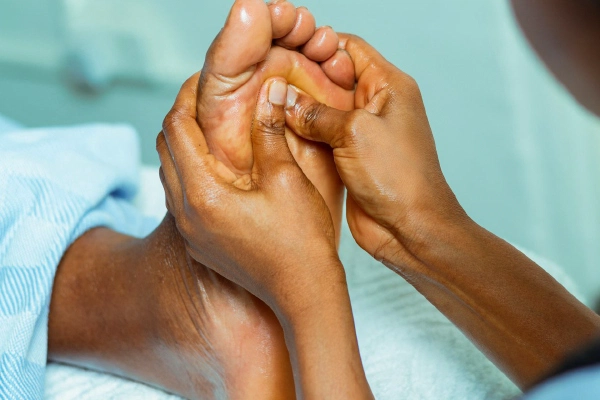
- Better circulation and less swelling: Walking barefoot on varied surfaces stimulates the sole of your foot in ways that shoes simply can’t. This natural massage effect activates the muscle pumps in your feet and calves, helping push fluid upward and reducing that heavy, puffy feeling. It’s not a cure for pregnancy oedema, but it genuinely helps
- Improved proprioception when you need it most: As your centre of gravity shifts, your body’s sense of where it is in space becomes critical. Barefoot walking keeps all 200,000 nerve endings in your feet fully engaged and sending accurate information to your brain. That’s real-time balance data that thick shoe soles switch off. Your ankles get smarter, not just your feet
- Arch support from the inside: Counterintuitive but true: the best way to support changing arches is to strengthen the intrinsic muscles that hold them up, not to prop them up artificially. Barefoot time on varied terrain does exactly that. The foot strengthening research backs this up clearly
- Natural grounding during an emotional time: Pregnancy is a time of deep physical and emotional change. The connection of bare skin to earth, whether grass in the garden or a wooden kitchen floor, brings a quality of presence that many pregnant women describe as calming. Something slows down. Something feels right
- Thermal regulation: Pregnant women often run warmer than usual. Bare feet on cool tiles or morning grass provide a genuinely pleasant thermal experience. That cool-floor feeling your grandmother warned you about? Your body during pregnancy often wants exactly that
The cold floor myth, pregnancy edition
If there’s one thing pregnant women hear constantly, it’s some version of “don’t walk barefoot on cold floors!” And during pregnancy, this myth gets louder, more specific, and comes with extra urgency. Your mother. Your mother-in-law. A neighbour who had strong opinions about these things.
Let’s be clear about the science: cold floors do not cause colds. Colds are caused by viruses. Full stop. We dedicated an entire article to busting this myth because it comes up so often, but the short version is this: the temperature of what’s touching your feet has zero effect on your susceptibility to respiratory infections. The virus has to be there for you to get sick.
This is true whether you’re pregnant or not. Pregnancy doesn’t change your immune system’s relationship with floor temperatures.
Myth: Cold Tiles = Sick Baby
Myth: You Need Arch Support Shoes
Myth: Barefoot = Dangerous Falls
Earthing and pregnancy: the grounding connection
Earthing, the practice of putting bare skin in contact with natural ground, gets talked about in wellness circles sometimes with more enthusiasm than evidence. But during pregnancy, there’s something real worth mentioning beyond the electrical theory.
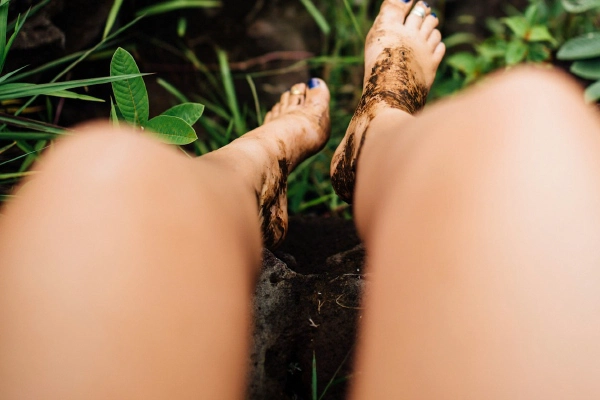
Standing barefoot on grass. Feeling morning dew on your soles. Sitting in a garden with your feet on earth. These experiences carry a quality of presence and connection that many pregnant women find genuinely meaningful. The feeling of being physically anchored to the ground while carrying new life is something that cuts across cultures, something ancient and quiet and not easily dismissed.
On the physical side: grass, soil, and natural stone are electrically conductive surfaces. If you believe in the electron transfer theory of grounding, pregnancy doesn’t change the mechanism. If you don’t, you’re still getting fresh air, gentle movement, natural sensory stimulation for your feet, and probably some sunlight. None of that is nothing.
What surfaces make sense, and what to be careful with
Barefoot during pregnancy isn’t all-or-nothing. It’s about being sensible. Here’s a clear breakdown:
Great Surfaces
- Home floors (wood, tile, stone): The safest barefoot environment during pregnancy. Familiar surfaces, known hazards removed, temperature controlled. This is where most of your barefoot time will naturally happen and it’s genuinely great for your feet
- Grass and garden: Soft, forgiving, excellent for earthing. The slight irregularity of natural grass is actually beneficial for proprioception. Morning dew is a bonus. Check for anything sharp before you head out, but this is low-risk
- Sand (dry beaches): Soft, naturally yielding, great for swollen feet. The gentle resistance of sand works your foot muscles in a way flat floors don’t. Avoid sharp shells and keep it to flat beach areas where footing is predictable
- Shallow water (warm weather): Walking in shallow ocean water, a stream, or a paddling pool gives incredible circulatory benefit for swollen feet. Cold water is actually welcome when you’re running warm. The grounding effect is also excellent, water is a great conductor
Be Thoughtful With These
- Outdoor trails in later pregnancy: The bigger your bump, the more your balance is affected. Uneven outdoor terrain that would be fine at other times becomes genuinely higher-risk in the third trimester. If you love trail walking barefoot, do it earlier in pregnancy and move to flat natural surfaces as your bump grows. Your barefoot hiking instincts are sound, the timing just matters more now
- Wet bathroom floors: Slippery when wet is true whether you’re pregnant or not, but falls matter more now. Grab rail, bath mat, sensible moves
- Surfaces you don’t know: New environments with unknown debris. Glass, thorns, rough edges. Check before you go full barefoot in unfamiliar outdoor spaces
- Very hot surfaces (summer): Pregnancy can make you feel the heat more intensely. Pavement in direct sun can get genuinely burning hot. Check with your hand or foot before committing. If it’s too hot for your hand, it’s too hot for your sole
When to loop in your midwife or doctor
Barefoot walking is low-risk for most pregnancies, but some situations call for a conversation with your healthcare provider:
Pre-eclampsia
Pelvic Girdle Pain (PGP/SPD)
Varicose Veins or DVT Risk
For the vast majority of healthy pregnancies, barefoot walking is not just safe but actively beneficial. The key is the same as everything else in pregnancy: be sensible, listen to your body, and don’t do anything that hurts or feels wrong.
Barefoot pregnancy FAQs
Your feet know what they're doing
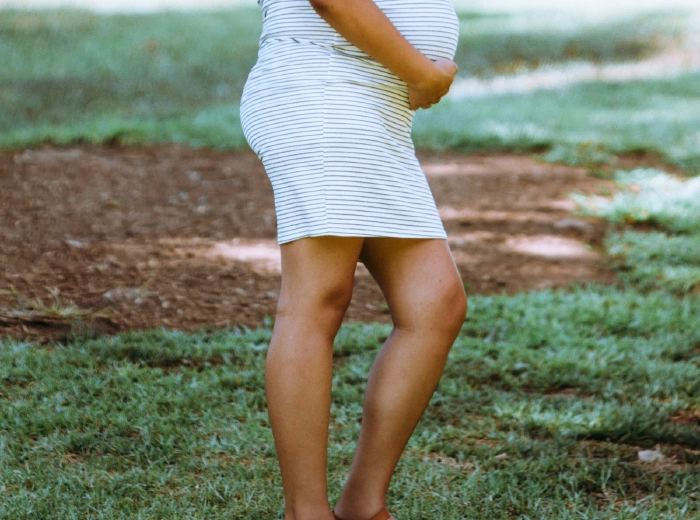
Pregnancy is a time when your feet are working harder than ever, carrying more weight, managing changing balance, and adapting to hormonal shifts that affect your very architecture. Barefoot time, especially at home and on safe natural surfaces, supports your feet through this rather than adding risk to it.
Your grandmother’s advice about cold floors comes from a good place. It’s just not correct. And the idea that pregnancy means your feet need more protection and more padding is, for most women, the opposite of what actually helps.
Let your feet feel the ground. Start at home, expand to garden and gentle outdoor surfaces as feels right, and be sensible about fall risk as your pregnancy progresses. Your feet have 200,000 nerve endings that were built exactly for this.
Go deeper into foot health during pregnancy and beyond:
- Earthing: why barefoot time on natural ground is one of the most underrated wellness practices going
- Barefoot at home: the simplest and safest place to start and keep going
- Foot strengthening exercises: how to support your arches from the inside through the changes pregnancy brings
- The cold floor myth, fully debunked: so you can politely but firmly answer the relatives
- Barefoot on natural ground: grass, earth, sand, forest floor and what each gives your feet
- Foot anatomy: the extraordinary architecture that’s doing extraordinary work right now
- Walking on different surfaces: how to make the most of every surface your feet touch