Barefoot Running
Here’s something that’ll mess with your head a little: before modern running shoes existed, people ran. Like, a LOT. Across deserts, through forests, up mountains. And they did it barefoot or with nothing more than a thin strip of leather under their foot. No heel cushioning. No arch support. No motion control technology. Just feet doing their thing on whatever ground was in front of them.
So maybe barefoot running isn’t the weird thing. Maybe the thick foam platform strapped to your foot is.
What barefoot running actually is
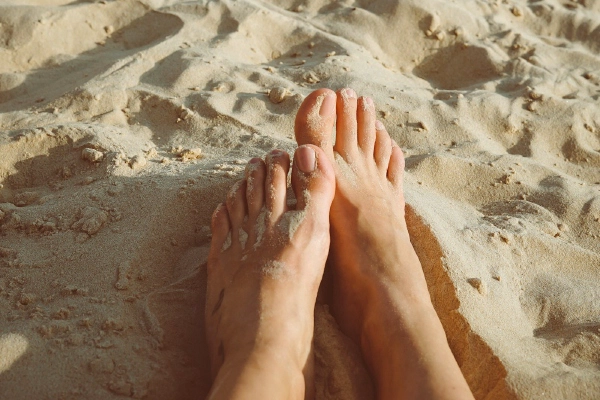
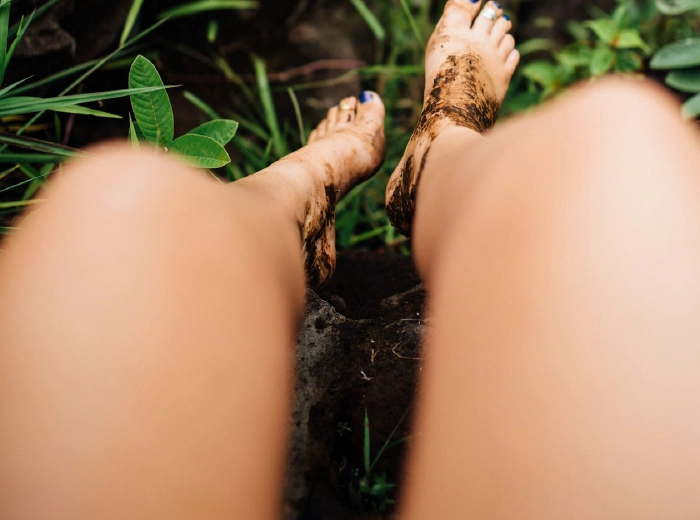
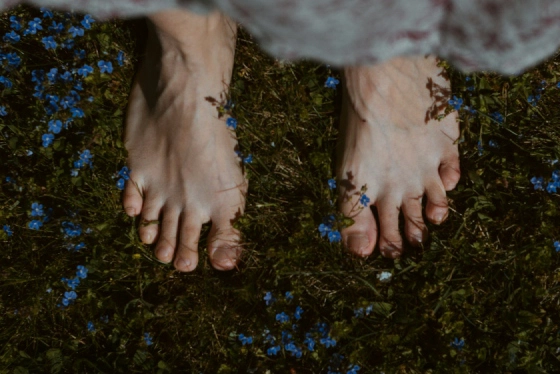
Let’s get something straight right off the bat. Barefoot running and minimalist running shoes are not the same thing. Minimalist shoes give you ground feel and flexibility while still protecting your soles from direct contact. Barefoot running means your skin is literally touching the ground. Zero separation. Full contact.
That’s the version we’re talking about here. The one that sounds wild, gets stares on the trail, and is honestly kind of life-changing once you get past the first few weeks of adaptation.
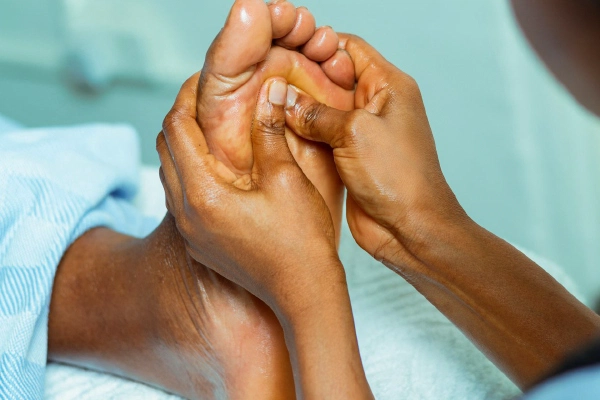
The thing about barefoot running is your feet are absolutely loaded with sensory receptors. Thousands of them packed into every square centimeter of your sole. When your bare skin hits the ground, all those nerves fire off signals to your brain in real time: ground texture, angle, temperature, pressure distribution. Your body processes all of it in milliseconds and adjusts your gait on the fly.
A shoe can’t replicate this. No matter how advanced the foam tech, the shoe is always between you and the ground, filtering out the very feedback your feet evolved to rely on. Running barefoot plugs you back into that feedback loop. And when your brain gets that data, your body runs better. Not because barefoot is magic, but because your nervous system is doing exactly what it was built to do.
Why your gait completely changes when you ditch the shoes
This is where things get properly fascinating from a biomechanics standpoint. When you run barefoot versus in cushioned shoes, your gait shifts in specific measurable ways that your body figures out almost automatically.
Foot Strike
Cadence
Full Body Posture
The best part is you don’t need to consciously “fix” all these things. Take the shoes off on soft ground, slow way down, and your body does the adjusting. Pain is the feedback loop: if something hurts, change something. Barefoot running turns you into a much better self-coach.
How to actually run barefoot (the right way)
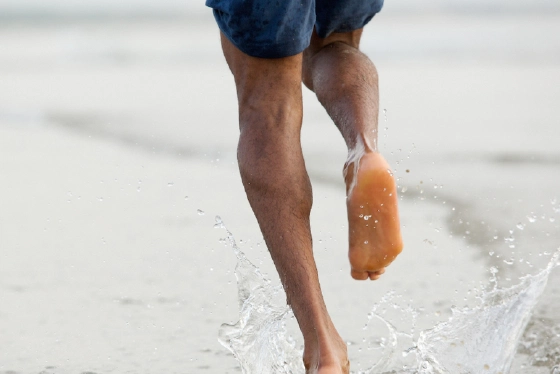
First rule: slow down. Way down. Barefoot running at the start should feel closer to a shuffle than a sprint. You’re waking up muscles that have spent years switched off in shoes, and you’re learning a completely new movement pattern. Speed comes months later, not weeks.
Land soft, midfoot first. Your foot makes contact under your center of mass, not out in front. Think of landing quietly. If your steps sound heavy, something needs to change.
Stay bent. Keep a slight bend in your knees on landing. Let your ankle, knee, and hip absorb impact through flex, not through rigidity. That’s the spring system your body comes built with.
Lean from the ankles. A slight forward lean from your ankle keeps your stride efficient. Leaning from your waist or staying totally upright usually means you’re heel striking.
Keep strides short and quick. Aim for around 170-180 steps per minute. You can count or use a metronome app. Short, quick steps beat long, heavy ones every time.
Relax everything you can. Loose hands, soft shoulders, relaxed jaw. Tension kills efficiency.
How to transition without destroying your calves
The number one reason people quit barefoot running is doing way too much way too soon. Your Achilles tendon and calf complex are just not ready for the loading shift when you go from heel-striking in cushioned shoes to forefoot-striking barefoot. Push too hard too fast and you will get injured.
Here’s a sane plan that works:
- Weeks 1-2: Walk barefoot on grass or smooth natural surfaces for 10-15 minutes. Just walk. Let your feet feel the ground and your muscles start waking up. No running yet, seriously.
- Weeks 3-4: Add short barefoot run-walk intervals. Run for 30 seconds, walk for 2 minutes. Keep total barefoot time to 15-20 minutes. Grass or dirt trail only.
- Weeks 5-6: Extend running intervals to 1-2 minutes. Keep pace very easy. Some calf soreness is normal. Sharp pain means stop. Total sessions: 20-30 minutes.
- Weeks 7-8: If everything feels good, try a continuous 10-15 minute easy barefoot run on a soft surface. That’s your first real one. It counts.
- Months 2-3: Gradually extend distance and start experimenting with firmer surfaces. Build the calluses and strength before hitting pavement.
Mix in foot strengthening exercises and toe exercises between sessions. The more barefoot time you stack up in daily life, the faster your feet adapt. And if you’re already managing something like plantar fasciitis, go even slower and run it by a physio. Barefoot can help some conditions, but the transition has to be extra gradual.
Mistakes every barefoot runner makes (skip these)
Too much, too soon
Starting on pavement
Ignoring calf signals
The real benefits of running barefoot
Beyond the novelty, barefoot running delivers genuine physical payoffs once you’re past the adaptation phase.
All those intrinsic foot muscles that cushioned shoes basically switched off start firing again. Foot strength improves across the board. People who make the switch consistently report that chronic knee and hip aches ease up over time. That’s not coincidence it’s better biomechanics expressing themselves.
Your proprioception (your nervous system’s spatial awareness) gets a real upgrade. Every barefoot run is an active sensory experience. You become more connected to your movement, more aware of your body in space, more present. A lot of runners say it feels almost meditative.
Your soles develop exactly the right protective toughness for the surfaces you run on. Not cracked calluses, but smart, flexible, functional skin that works with you.
And the purely mental side of it is underrated. Barefoot running forces presence. No zoning out on autopilot. You and the ground, figuring it out. A lot of barefoot runners say it’s the most alive they feel all week.
Barefoot Running FAQs
Your feet were literally built for this
Barefoot running isn’t a trend, a fad, or an extreme sport. It’s just humans doing what humans have always done moving across the earth using the equipment evolution provided.
You don’t need to run a marathon barefoot. You don’t need to ditch your running shoes completely. You just need to try it a short, easy session on soft ground and see what your feet can do when you give them the chance.
Slow down. Be patient. Listen to your body. Let your feet remember what they were made for.
Keep going with these:
- Full barefoot transition guide: the complete step-by-step
- Foot strengthening exercises: build the foundation
- Barefoot skin care: keep those feet fresh and tough
- Barefoot hiking: take your bare feet off-road
- Minimalist running shoes: the in-between option