Barefoot Skin Care
Nobody sits you down and explains what happens to your feet when you start going barefoot for real. You kind of figure it out along the way and either panic, ignore it, or both at the same time. This is the article nobody wrote for you when you started.
Barefoot feet have completely different needs than shoe-trapped feet. Once you get that, everything makes sense.
Calluses are not your enemy
The first thing people freak out about when going barefoot is the skin getting thicker. They see calluses forming and immediately want to file them off or soak them baby-soft. That’s backwards.
Calluses are your feet building their own armor. They’re the skin adapting to contact, pressure, and texture the way it’s been doing for literally millions of years. Barefoot runners and hikers who’ve been at it for years have soles that handle terrain that would wreck soft feet immediately and those same soles are pliable, functional, and healthy. Not cracked, not painful.
The enemy isn’t callus. The enemy is the wrong kind of callus.
Good Callus
Problem Callus
The Fix
Understanding this one thing saves you from a pile of unnecessary products and a lot of confused attempts to make your feet look like they’ve never seen the outside of a spa. They’re working feet. Let them look like it.
The actual routine (3 minutes, tops)
Good news: barefoot foot care is way simpler than the beauty industry wants you to believe. You don’t need twelve products and a twenty-step routine. Here’s what actually matters.
Wash and dry properly. After any outdoor barefoot session, wash your feet. Not just rinse, actually scrub with soap, especially between the toes. Moisture trapped in there is where fungal issues love to start. Dry thoroughly after, including between toes.
Check what you walked on. Give your soles a quick scan. Any cuts, splinters, or bits embedded in the skin? Get them out right away before your skin closes over them. A clean needle and good lighting handle 99% of cases.
Trim nails straight across. Barefoot changes how your nails make contact with the ground. Cut them straight, not curved at the corners. Curved edges plus barefoot activity is a direct route to ingrown nails.
Light oil when needed. After washing and drying, especially in dry seasons or after heavy use, a tiny amount of oil worked into the soles and heels keeps the skin flexible. Not necessarily every day. Just when the skin starts looking tight or the heels feel rough at the edges.
That’s it for most people, genuinely. Everything else is situational.
Oils and products that make sense for barefoot feet
The foot care market is full of stuff that’s completely wrong for barefoot people. Thick creams that make your soles baby-soft? Terrible before any barefoot session. Chemical peel kits that strip all your callus? Also terrible. Here’s what actually works.
- Coconut oil: Absorbs well, has mild antifungal properties, and doesn’t leave a greasy mess if you use a small amount. The go-to for most barefoot regulars. Works great between toes too.
- Jojoba oil: Closest to the skin’s natural sebum. Absorbs without clogging pores. Great for dry cracked heels. More expensive than coconut but a little goes a long way.
- Shea butter: Better for heels specifically when they start getting that tight, about-to-crack feeling. Richer than oil, use it sparingly and let it absorb before walking on anything.
- Magnesium spray: Not skin care exactly, but spraying it on your soles after intense barefoot activity helps with muscle recovery and can cut foot soreness noticeably. Good move after long sessions of earthing or trail time.
- Simple antifungal soap: Underrated. Consistent use between toes prevents most fungal issues before they start. Don’t overthink it.
Skip anything with heavy synthetic fragrances, silicones, or “foot whitening” marketing. Those products are designed for shoe-wearing people who never stress-test their feet. They’ll make yours too soft for real barefoot life.
Cuts, splinters, and minor wounds: what to actually do
You’re going barefoot. You will occasionally get a cut. Here’s how to handle it without drama.
Rinse immediately. As soon as you’re aware of a cut, find water and rinse it properly. Clean water removes debris and cuts infection risk dramatically. You don’t need anything else in that moment.
Keep it clean and let it breathe. Barefoot feet have excellent circulation, which means they heal faster than most people expect. A clean cut with good blood flow doesn’t need to be sealed under a bandage for days. Clean it, dry it, and let air at it when you can.
Watch for actual infection signs. Spreading redness, warmth, swelling, pus. If any of these show up in the 24-48 hours after a cut, go get it looked at. Foot infections don’t wait around.
Go minimal while healing. When you’re nursing a cut, minimalist shoes or open sandals beat fully enclosed shoes. The goal is clean and dry, not sealed and sweaty.
Splinters: clean the area, sterilize a needle, get it out, rinse. Don’t wait and hope it works itself out. It usually doesn’t.
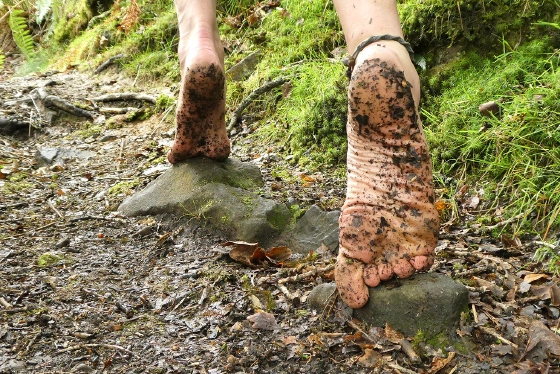
Summer skin vs winter skin
Your feet need different things depending on the season and this is actually pretty intuitive once you pay attention to it.
Summer
Winter
Year-round, the biggest thing is just paying attention. Your feet will tell you what they need if you’re actually looking.
Barefoot Skin Care FAQs
Your feet need maintenance, not a makeover
Barefoot foot care isn’t complicated. Wash, dry, trim, check, and occasionally oil. That handles 95% of everything. The other 5% is just noticing when something feels off and handling it before it becomes a bigger deal.
Stop trying to make your feet look like they’ve never touched the ground. They’re supposed to touch the ground. They’re supposed to adapt to it. That adaptation, skin that’s smart and functional and actually ready for the world, is literally the whole point of going barefoot.
Keep building:
- Barefoot transition guide: how to start the whole journey right
- Walking surfaces guide: what different terrain does to your skin
- Foot strengthening exercises: skin and muscle working together
- Barefoot hiking: put that tough skin to real use on trails
- Foot massage guide: recovery and maintenance for hard-working soles