Barefoot in Water
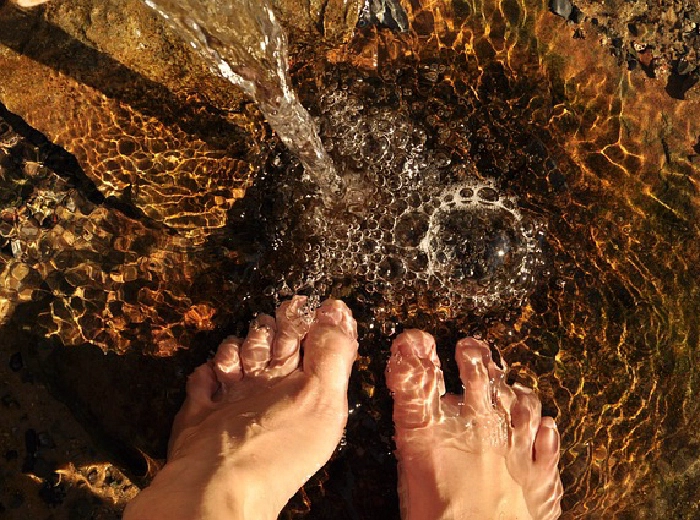
You know that thing that happens the moment you step into a cold stream or let an ocean wave wash over your bare feet? That full-body gasp. The instant clarity. The way everything loud in your head goes quiet for a beat.
That’s not just a nice feeling. Your feet are having a conversation with that water that’s been going on for about four million years. You just forgot to show up barefoot.
Why water is the wildest terrain your feet will ever touch
The ground your feet have walked on for most of your life doesn’t move. It doesn’t change temperature in real time. It doesn’t push back or pull away or shock your system into full alertness. Water does all of that at once.
When your bare feet meet water, three things happen in about half a second:
Thermal Shock
Constant Motion
Electrical Connection
The result is a sensory experience that’s in a completely different league from any dry surface. Pebbles are great. Grass is lovely. But water? Water is the whole nervous system saying “THERE you are.”
Sea walking: where land stops being sure of itself
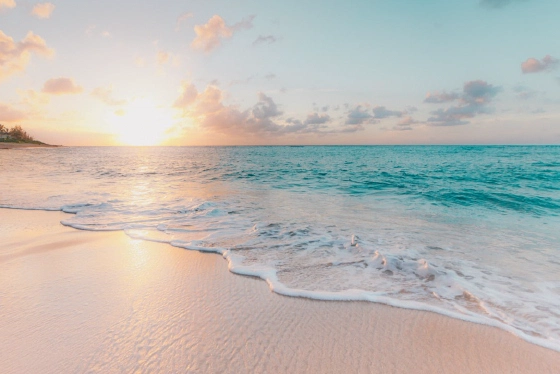
Stand at the edge where the sea meets the sand. Water creeps up over your toes. Cold. Salty. Gone again. Then back. The ground literally dissolves and reforms beneath you with every wave.
This is the foot experience humans did every single day before cities, before pavements, before the concept of waterproof trainers. Your feet remember it even if you don’t.
Walking in the shallows is a full sensory workout in disguise. Wet compact sand is incredibly demanding. It gives just enough to force your foot muscles to work hard, while firm enough to push back. Each incoming wave changes the ground in real time. Your toes grip and spread. Your ankles adjust constantly. Your calves get a real workout.
And then there’s the water itself. The temperature. The salt. The buoyancy that makes your step feel lighter than on any dry surface. The earthing happening every second your skin touches the sea. Twenty minutes barefoot in shallow sea water does something for your feet and your mood that’s genuinely hard to explain and very easy to feel.
Walk slowly. Let waves come. Resist nothing. This is barefoot at its most ancient and most alive.
Stream and river walking: the barefoot experience that changes everything
If you’ve never walked barefoot in a natural stream, this is the thing I want you to do before you try anything else in this article.
Because streams are wild. The bottom is always mixed: smooth river stones that have been polished by centuries of water, loose pebbles that shift when you step on them, patches of cold sand, the occasional flat rock that’s slightly slippery with algae. Your feet have to be 100% present for all of it. There’s no option to zone out.
- Real terrain under moving water: The stream bottom is never the same from one step to the next. Your feet read every stone, every texture change, every shift in the riverbed. It’s the most proprioceptively demanding surface you’ll ever walk on, and also one of the most therapeutic
- Temperature as therapy: Cold stream water activates circulation immediately. Blood vessels constrict then dilate. Your lymphatic system gets a nudge. Your feet, which tend to get warm and stagnant in shoes all day, get completely reset. Fifteen minutes in a cool stream is better than any foot soak you’ve ever done
- The sound alone: Water over rocks produces a sound frequency that measurably reduces cortisol levels. You’re not just walking on something. You’re inside something. The stream holds you in a sensory bubble that urban life doesn’t come close to replicating
- The stones do the work: Natural river stones apply pressure to your sole in random, unpredictable patterns. Think of it as a natural reflexology session that hits pressure points a trained therapist would have to map carefully. The stream does it for free, every step
Start shallow and slow. Find a clear-bottomed stream where you can see the bottom. Wade in to ankle depth. Stand still first and let your feet adjust to the temperature. Then start walking, slowly, with full attention on what’s beneath you. Ten minutes is plenty for a first session. You’ll come out feeling like you just had a full body reset.
Kneipp therapy: when a Bavarian priest figured out what your feet needed
In the 1850s, a young Bavarian theology student named Sebastian Kneipp was convinced he was dying of tuberculosis. In a moment of desperation, he threw himself into the freezing Danube river in winter, barefoot, daily, for weeks. He didn’t die. He got better. And he spent the rest of his long life figuring out why.
What Kneipp discovered and documented became one of the most influential natural health traditions in European history: that alternating cold and warm water on the feet and legs does something profound for the whole body. Not woo. Not placebo. Real, measurable, powerful stuff.
What Kneipp Walking Does
Where to Find Kneipp Paths
The Kneipp tradition proves something that the barefoot world already suspects: cold water and bare feet are not just pleasant. They’re medicine. The tradition has been practiced for 170 years across millions of people. The Brownies of the alpine forests, those barefoot creatures who wade through mountain streams without a second thought, have been doing their own version of this since long before Kneipp gave it a name.
You don’t need an official facility. Any cool stream or cold outdoor pool works. The method is simple: walk slowly in cold water for 1-3 minutes. Get out. Walk on dry ground or grass until your feet are warm again. Repeat. Start once a day and build up. Your feet, your circulation, and your mood will notice within a week.
Water as earthing: the most powerful grounding surface you can find
If you’ve read the earthing article, you know that direct skin contact with the earth transfers free electrons into your body, and that this has measurable effects on inflammation, sleep, and stress. Water makes that whole process stronger.
Natural bodies of water are conductive. They’re full of dissolved minerals and ions that carry electrical charge easily. Salt water is especially conductive. When your bare feet are in the sea or a natural stream, the electron exchange between the earth’s surface and your body happens faster and more completely than on any dry surface.
This is why a swim in the sea, or even just standing with bare feet in a natural stream, leaves most people feeling genuinely calmer and clearer than before they went in. It’s not just the fresh air or the scenery. The water is doing something electrical.
Combined with the movement of water, the cold temperature response, the reflexology effect of natural stones, and the proprioceptive challenge of an unstable surface, barefoot water walking hits more health levers at once than almost anything else you can do with your feet. For free. Outdoors. While looking at something beautiful.
How to actually start doing this
The barrier is almost zero. Here’s the progression:
- Week 1: Sea edge or stream ankle-depth. Just stand. Feel the temperature. Feel the movement under your feet. Walk 5-10 steps. That’s enough for day one. Let your nervous system get used to the stimulus before you ask it for more
- Week 2-3: Walking in the shallows. Fifteen minutes of slow walking in shallow water. Focus on what’s beneath your feet, not on where you’re going. Let your foot adjust to each surface change before you put your weight down
- Week 4+: Varied water terrain. Now start mixing it up. Wet packed sand, then loose pebbles, then stream stones. Kneipp cold-warm alternation if you have access. River crossings with careful attention. Your feet are adapting fast by now
- Ongoing: Make it a habit. Once a week minimum. After a few months, your soles will be tougher, your circulation noticeably better, and your connection to natural water will feel like something you can’t imagine having lived without
Where to find water terrain in your area:
- Beaches (obviously) but specifically: look for the stretch where wet sand meets the first layer of incoming waves
- Rivers with accessible pebbly or sandy banks (most city rivers have at least one stretch)
- Forest streams if you’re near woodland
- Kneipp facilities in parks across Central Europe
- Lake edges with natural sandy or pebbly shores
- Coastal rock pools at low tide, endlessly varied, endlessly interesting
Safety note: know your water. Avoid fast currents, unknown depths, water near industrial areas, or surfaces you can’t see clearly. Barefoot water walking is about presence and sensation, not risk. Choose calm, clear, shallow water and stay within your depth.
Barefoot Water Walking FAQs
Your feet and water have unfinished business
For most of human history, your feet were in regular contact with natural water. Streams to cross. Shorelines to walk. Rivers to wade. Water was part of the daily sensory diet, not a leisure activity you had to schedule.
We’ve removed most of that contact and replaced it with flat, dry, predictable surfaces. The result is exactly what you’d expect: feet that are under-stimulated, over-protected, and not doing what they were built to do.
Barefoot water walking isn’t a trend or a wellness hack. It’s a return to something that was always there. The cold stream your ancestors crossed every morning. The sea edge where ten thousand generations of humans stood and felt the same thing you feel now.
Get your feet in some water. Let the stream say what it’s been trying to say. Your feet will remember the language immediately.
Explore more:
- Earthing and grounding: the science behind barefoot-to-earth contact
- Walking on different surfaces: your complete guide to dry terrain
- Barefoot hiking: take the barefoot experience onto natural trails
- Barefoot parks and sensory paths: dedicated barefoot routes across Europe