Barefoot in Winter
So you’ve been rocking the barefoot life, walking on grass, feeling the earth, watching your feet get stronger. Then winter shows up like an uninvited guest and suddenly the ground is cold, wet, and potentially covered in ice. Time to pack it in until spring?
Nah. Winter is just barefoot mode on hard difficulty. Let’s talk about how to handle it.
Why keep going barefoot in winter?
Fair question. If it’s cold and uncomfortable, why not just wear regular boots for a few months? Here’s why:
- Use it or lose it: Foot muscles weaken fast when locked in rigid winter boots. A few months off can undo a lot of the strength you built. Maintaining some barefoot practice keeps those gains alive
- Cold tolerance is trainable: Your feet adapt to cold faster than you’d think. Blood flow improves as your body learns to circulate heat to your extremities more efficiently. This is a real physiological adaptation
- Circulation benefits: Brief cold exposure actually improves circulation long-term. Your blood vessels learn to dilate and constrict more effectively, keeping your feet warmer even when it IS cold
- Mental toughness: There’s something about standing barefoot on cold ground that makes you feel like you can handle anything. It’s a small daily win that compounds into genuine resilience
- Ground connection doesn’t hibernate: The earth is still there under the frost. The sensory benefits, the grounding effects, the proprioceptive input, they don’t stop just because the temperature dropped
Nobody’s saying you need to go full Wim Hof and stand in snow for an hour. But keeping SOME barefoot time in your winter routine is absolutely worth it.
How cold adaptation works
Your body has a built-in system for dealing with cold, it just needs practice to work well. Here’s what happens when you regularly expose your feet to cold:
Vascular Training
Brown Fat Activation
Neural Adaptation
The key is gradual exposure. Don’t go from fully booted all year to barefoot in January. Start in autumn when temperatures are dropping slowly, and your body will adapt naturally.
Winter barefoot strategies
Let’s get practical. Here’s how to maintain barefoot practice through the cold months:
Indoor Barefoot (The Easy Win)
- Always barefoot at home: This is non-negotiable and requires zero bravery. Ditch the slippers. Walk around your house barefoot. Stand on different surfaces, tiles, wood, rugs. This alone maintains a lot of foot strength. Our barefoot at home guide covers every surface and why it matters
- Indoor pebble mat: Get a river stone mat or similar textured surface. Stand on it while you brush your teeth, cook, or work at a standing desk. Constant low-level foot exercise with zero cold exposure
- Foot exercises while watching TV: Toe spreads, marble pickups, towel scrunches. Winter is the perfect time to build foot strength indoors
Outdoor Barefoot (The Challenge)
- Brief sessions: Start with 2-3 minutes barefoot on cold ground. Step outside, stand on the grass or soil, feel the cold, then go back inside. Build up gradually
- The “coffee walk”: Take your morning coffee outside and stand barefoot while you drink it. By the time you finish, you’ve had 5-10 minutes of cold exposure without even trying
- Post-warm up exposure: After a hot shower or workout, your core temperature is elevated. This is the perfect time for a brief barefoot outdoor session, you can tolerate more cold when you’re already warm
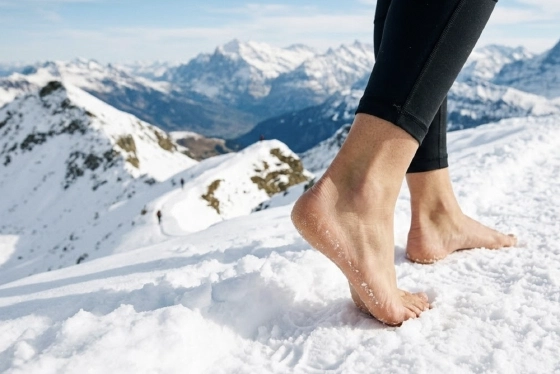
- Snow walking (advanced): Yes, walking barefoot in snow is a thing. It’s intense but brief exposure (30 seconds to 2 minutes) followed by rewarming is actually exhilarating. Work up to this, don’t start here
The Smart Shoe Strategy
- Minimalist winter boots: They exist and they’re great. Look for flexible soles, wide toe boxes, and zero drop, just with insulation. Your feet stay warm but still function naturally
- Wool socks in minimalist shoes: Merino wool is the MVP here. Warm, moisture-wicking, and thin enough to still feel the ground. Layer them in wider minimalist shoes
- Know your limits: Below certain temperatures, bare skin + ground = frostbite risk. Be smart about it. Extended barefoot time below freezing requires experience and caution
The beauty of cold ground
There’s a moment, right when your bare foot touches cold ground, where your whole body goes “WAIT.” Every nerve ending fires. Your brain lights up. And then, after a few seconds, something beautiful happens: you adjust. Your body figures it out. The initial shock fades and you’re left with this crystal-clear awareness that’s impossible to get any other way. Even the Magikitos, those adventurous little barefoot brownies who roam the forests year-round, say winter ground is where the real magic happens.
That moment of cold contact is addictive once you stop fearing it. It’s the ultimate sensory reset, like a cold shower for your feet. Brief, intense, and strangely energizing. Your circulation kicks into gear, your mood lifts, and you walk back inside feeling like you could conquer anything.
Why cold exposure is actually good for you
Beyond just maintaining your barefoot practice, cold foot exposure has some genuine health benefits:
- Better circulation: Repeated cold-warm cycling trains your blood vessels. Over time, you get better circulation to your extremities year-round, warmer feet even when you’re NOT doing cold exposure
- Less inflammation: Cold exposure triggers anti-inflammatory responses. If you deal with chronic foot issues, a little cold can actually help
- Immune system boost: Regular cold exposure has been linked to improved immune function. Not proven to prevent colds, but the research direction is promising
- Mood enhancement: Cold triggers endorphin and norepinephrine release. There’s a reason people feel amazing after cold plunges, it works for cold foot sessions too, just less dramatic
- Better sleep: Evening cold foot exposure (followed by warming up) can improve sleep quality. The body’s rewarming process triggers relaxation
Winter Barefoot FAQs
Winter is a feature, not a bug
Cold weather isn’t the enemy of barefoot living, it’s actually an opportunity. A chance to build resilience, level up your circulation, toughen your mental game, and prove to yourself that your feet can handle way more than you thought.
You don’t need to be extreme about it. Just don’t let winter be the excuse to stuff your feet back into rigid boots and forget about them for four months. Stay barefoot at home. Get outside on the cold ground for a few minutes when you can. Keep doing your foot strengthening exercises.
Your feet don’t stop needing your attention just because it’s cold. If anything, they need it more. Check your skin care routine for winter conditions and keep up those toe exercises daily.