Barefoot Yoga
You roll out your mat, you do your sun salutations, and somewhere in warrior II you wonder why your balance is slightly off. Nine times out of ten? It’s the socks. Or the grip shoes. Or the simple fact that there’s a barrier between you and the ground that’s messing with everything your nervous system is trying to do.
Yoga was invented barefoot. On the floor. In the dirt. There’s a reason for that.
Why yoga was always a barefoot practice
Long before “yoga grip socks” became a thing, people practiced on clay floors, stone courtyards, and grass. The whole point of the practice (grounding your body, connecting breath to movement, building stability from the ground up) only fully works when your feet are actually touching the surface.
Yoga philosophy has the concept of grounding built into almost every pose. Tadasana (mountain pose) is about feeling the four corners of your feet. Warrior II is about driving your back heel into the ground. Tree pose is about growing roots through your standing foot. None of this fully happens with socks on.
Your feet have more sensory nerve endings per square centimeter than almost any other part of your body. When you practice barefoot, you give your nervous system a massive stream of real-time feedback. That feedback is the difference between a pose that looks right and a pose that is right.
What actually changes when you go barefoot on the mat
Balance gets real
Strength wakes up
Grounding is literal
Alignment clicks
What if my feet are too weak for barefoot yoga?
This is the most common concern, and it’s totally valid. If you’ve been in shoes most of your life, your feet probably aren’t at 100% of their potential. That’s okay. That’s literally why barefoot yoga is great. It’s both the diagnosis and the treatment.
Start here:
- Begin with floor poses: Mountain pose, seated poses, and lying-down poses are perfect starting points. You build awareness and connection without loading potentially weak arches
- Try toe exercises before your practice: Five minutes of toe spreads, toe curls, and single-toe lifts primes your feet for the session. Your balance in standing poses will noticeably improve
- Ease into balance poses: Tree pose and warrior III are humbling for everyone at first. Put a small bend in your standing knee, really spread your toes, and let yourself wobble. That wobbling is your feet figuring out their job
- Give it 4-6 weeks: Foot strength doesn’t change overnight. About a month of consistent barefoot practice is usually when people first notice their balance has genuinely improved
Mat, wood, grass: the surface guide
Where you practice barefoot makes a real difference:
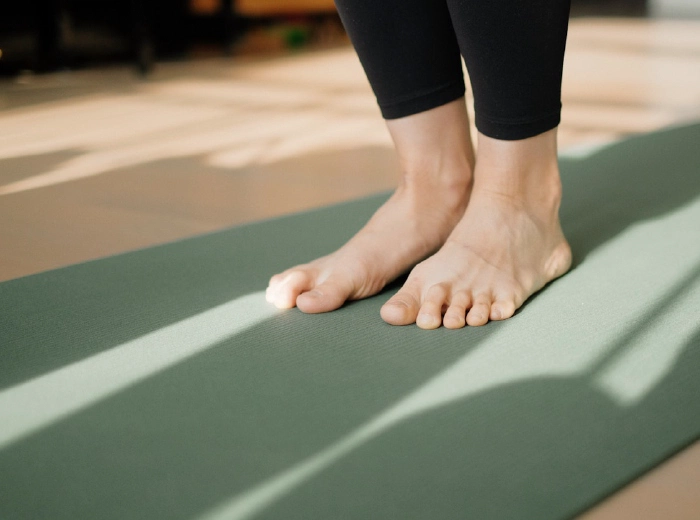
Yoga mat
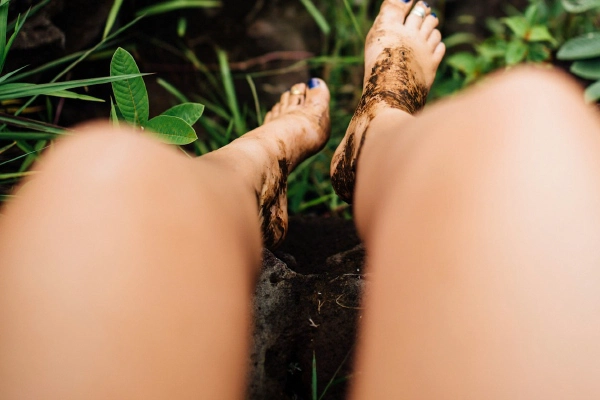
Grass and earth
Hardwood floors
It's not just about balance
There’s a reason barefoot yoga practitioners often describe their practice as feeling “more alive” or “more present.” Part of it is the physical feedback loop. Stronger, more aware feet create a more stable, aligned body. But part of it is something harder to quantify.
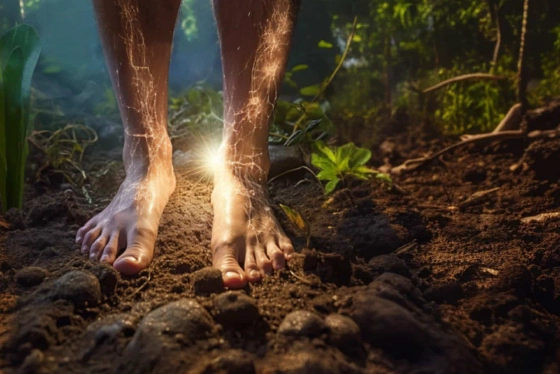
When your skin touches the ground (whether it’s a mat, wood floor, or actual earth), something in your nervous system settles. Deeply. In yoga, the concept of Pada Bandha (foot lock) is about consciously engaging the arch and activating energy flow from the ground up. This is basically impossible with socks on.
The practice rewards those who show up completely. Barefoot is part of showing up completely.
Barefoot Yoga FAQs
Your feet know what to do
Yoga teachers have been telling students to “feel the ground beneath you” for thousands of years. They didn’t mean through a layer of rubber grip socks.
Your feet have 26 bones, 33 joints, and over 100 muscles, tendons, and ligaments, all designed to read the surface they’re on and respond in real time. When you practice barefoot, you invite all of that intelligence into your practice.
Start your next session without socks. Spread your toes before mountain pose. Notice what changes. Your feet have been waiting for this.
Keep exploring:
- Foot strengthening exercises: build the foundation for everything
- Barefoot skin care: how to keep your feet healthy and fresh
- Toe exercises: five minutes that change your whole practice
- Earthing: why bare skin on the ground does more than you think
- Barefoot dancing: when your feet already know the music