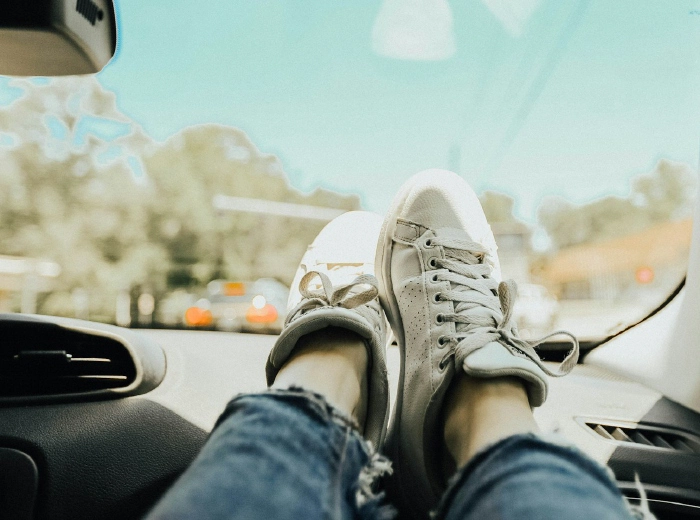
Driving Barefoot
Long road trip, hot afternoon, your shoes are bugging you and you kick them off into the passenger footwell. Then a tiny voice in the back of your head goes: “Wait, is this even legal?”
Same energy as wondering if you can swim straight after eating. Time to clear it up.
So is driving barefoot illegal?
Quick version: in the UK, no, it is not illegal to drive barefoot. Same across most of Europe. Same in the US, every single state. There is no law anywhere in mainstream English-speaking countries that bans you from driving without shoes on. Full stop.
What does exist is a much vaguer rule that pops up in pretty much every country: you must be in proper control of your vehicle at all times. That is the line your barefoot driving has to respect. If the police think your footwear (or lack of it) is making you drive worse, they can ping you under that catch-all. But the bare feet themselves are not the crime.
Where the Myth Comes From
Half the planet thinks driving barefoot is illegal because somebody’s dad said it was. That is literally the source. There is no Highway Code paragraph, no DVSA rule, no traffic act anywhere in the UK that names bare feet as illegal. The official position from the DVSA is that you can drive in whatever footwear you want, including none, as long as you have proper control.
The same myth lives in every country and gets passed around at family dinners forever. The boring truth is that lawmakers were way too busy with actual problems to ever write a “no bare feet behind the wheel” rule.
What “Proper Control” Actually Means
Here is where it gets interesting. The police can pull you over for driving without due care. If you slip off the brake pedal because your foot is sweaty, that is on you. If a flip-flop gets wedged under the brake, that is also on you. The rule is not about specific footwear, it is about whether you can do the job.
For most people with healthy, switched-on feet, bare driving is actually steadier than driving in clunky boots, slippery flip-flops, or wobbly heels. Which is why this whole thing is funnier than it sounds.
Country by country, just for clarity
Different countries, different vibes, but the punchline is mostly the same. Here is the honest breakdown for the places people ask about most.
United Kingdom
United States
Spain
Italy
France
Germany
What this tells you: across all the countries Feet Better readers actually live in, the law is the same shape. No specific ban on bare feet. A general duty to keep control of the vehicle. And a sliding scale of how seriously local police take that duty in practice.
If you really want airtight peace of mind, keep a pair of light shoes in the door pocket. You will never get pulled over, and the spare option is right there.
What about your insurance?
This is the second big fear: “If I crash while barefoot, will my insurance ghost me?”
Short version: in the UK, US and the rest of Europe, insurers do not have a specific “no barefoot driving” exclusion. Your policy covers you whatever you wear (or do not wear) on your feet. What insurers DO care about is negligence. If you cause a crash and the assessor decides your footwear (or lack of) contributed, they can reduce the payout, regardless of whether you were in flip-flops, stilettos, or bare.
In practice? Almost never happens. Insurance assessors care about drink, drugs, speed, phones, mechanical state, and licence status. “She was barefoot” has basically never been the deciding factor in a claim. Stop losing sleep over it.
The Only Real Insurance Tip
If you are still nervous, screenshot the official line from your country’s traffic authority and keep it in your phone. Spain DGT, UK DVSA, France Sécurité routière, Italy Codice della Strada, Germany ADAC. Each one has a published statement, and pulling it up takes about ten seconds if anyone ever asks. That is the cheapest legal insurance you will ever have.
Is it actually safer or not?
Forget the legal stuff for a second. The actually interesting question is: does driving barefoot make you a better or worse driver?
The honest answer: for most healthy adults with reasonable foot strength, bare feet are at least as safe as shoes, and often safer than terrible shoe choices. Here is why.
What Bare Feet Bring to the Pedals
- Pedal feel goes through the roof: Your sole has more nerve endings per square centimetre than your hand. That feedback tells you exactly how much pressure you are putting on the brake or accelerator. The difference between “smooth stop” and “passenger hits the windscreen” is mostly in that signal
- No more pedal slip: Wet flip-flops, leather soles in the rain, snow-caked boots, those are the real safety nightmares. Bare skin grips rubber pedals better than most footwear on Earth
- No floor-mat snag: A bare foot cannot get hooked under the brake pedal or wedged between the floor mat and the accelerator. Shoes do that. It is one of the underrated causes of stuck-pedal accidents
- Smaller foot, more pedal room: Some cars have tight footwells and pedals close together. Bare feet take up less space, so you brush the wrong pedal less often
Where Bare Driving Actually Gets Sketchy
We are not going to pretend it is perfect for every situation. Bare feet are a problem when:
Emergency Brake Power
Long Trips
Weak or Sensitive Feet
The footwear that's actually dangerous
Here is the punchline most people miss. The same officials who say “we’d prefer you wear shoes” have published actual studies showing which shoes cause the most accidents. Bare feet are never in the top three. Want to know what is?
Flip-Flops
High Heels
Big Snow Boots
The funny part: the same nan who tells you “you can’t drive barefoot, that’s dangerous” will then drive home from the supermarket in flip-flops. The Brownies are watching, and they are giggling.
How to actually drive barefoot well
Like everything in the barefoot world, the trick is not “just rip the shoes off and hope”. A bit of common sense and you are golden.
- Try it on a quiet road first: Find a five-minute loop in your area with no traffic and just feel the pedals. Test the brake at different pressures. Get a sense of how your foot reacts before you go anywhere busy
- Keep your feet clean and dry: A wet, sandy or muddy foot will slip. Beach trips, kick the sand off before you get in. Easy fix
- Stash a backup pair: Light slip-ons in the door pocket. Police asks, garage forecourt looks dodgy, weather flips, you have an option. Costs nothing, removes all stress
- Use the feet you have: If your feet are stiff, weak or sore, build a base first with simple toe exercises and some foot strengthening. A strong, mobile foot is a confident foot on the brake
- Notice how you feel afterwards: Most people get out the car after a barefoot drive and their lower back is calmer, their shoulders less hunched. That is real feedback. Your nervous system likes that pedal feel
- Do not be that person: Foot on the dashboard while a friend is driving? Catastrophic if the airbag pops. Bare feet are for the driver, not for the passenger glamour pose
If you have been working on a wider barefoot transition in your everyday life, driving barefoot feels like a natural next step. The same feet that walk grass and rock paths are going to read a brake pedal beautifully.
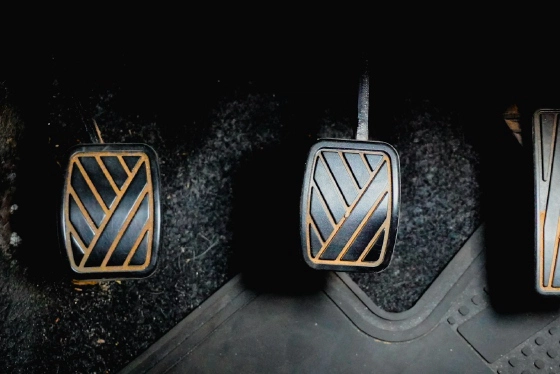
Why bare driving just hits different
There is something about the moment you slip your shoes off in the car. A road trip starts properly. The cabin warms up around your feet. The brake stops being a piece of plastic and starts being part of you. You drive smoother almost by accident.
Long highway days with bare feet on the pedals leave us less wrecked at the end. Less hip stiffness, less ankle tightness, less of that “I need to walk it off” feeling when you pull into the petrol station. It is the same reason people fall for barefoot hiking: the body works better when it can feel what it is doing.
Driving barefoot is not a magic upgrade, but it removes a layer between you and the machine. And once your feet have tasted that, putting them back into work shoes for a quick errand feels weirdly clumsy. The car becomes one more place where your feet get to be themselves.
Driving Barefoot FAQs
Drive how your feet were built to drive
Driving barefoot is not illegal anywhere in the UK, the US, or any major European country. There is no secret law, no insurance trap, no looming fine waiting to ruin your road trip. The “you can’t drive barefoot” thing is family folklore, not the Highway Code.
What is real: bare feet usually give you more pedal feel, less slip, and less of that lower-back stiffness after a long drive. The only footwear that really deserves the side-eye behind the wheel is the flip-flop and the chunky boot. Bare feet are not the danger. They are often the upgrade.
Slip them off when it feels right, keep a backup pair in the door pocket, and enjoy the cabin warmth around your toes. The road feels a little more alive, and your feet do too. The Magikitos approve.
Keep walking the barefoot path:
- The barefoot transition guide: build the foot strength your pedals will love
- Walking on different surfaces: the practice that makes any pedal feel intuitive
- Foot strengthening: so a panic brake never catches you off guard
- Barefoot myths debunked: more stuff your gran told you that is wrong
- Barefoot travel: keep that foot freedom going wherever you roll