Earthing
So you heard that walking barefoot on grass can reduce inflammation, fix your sleep, and basically recharge you like a phone on a wireless charger. And your first thought was probably: “That sounds amazing” or “That sounds like complete nonsense.”
Fair. Let’s figure out what’s actually going on here.
What even is earthing?
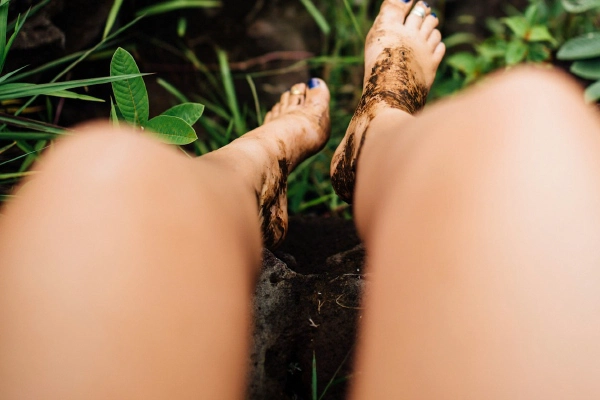
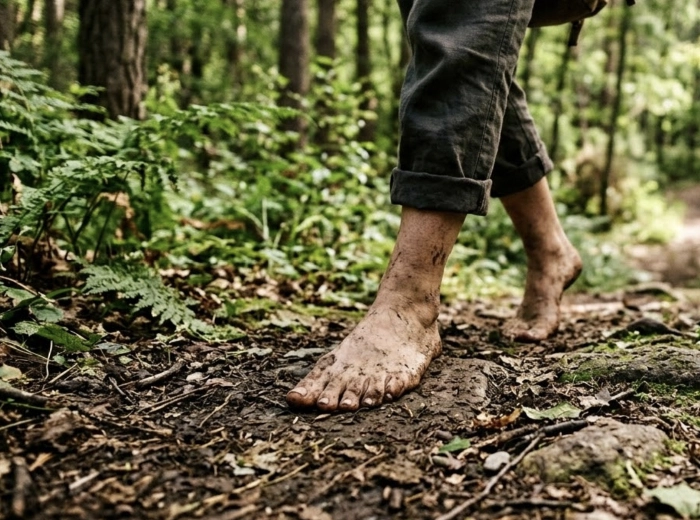
Earthing (also called grounding) is stupidly simple: you put your bare skin in direct contact with the Earth. Walk on grass. Stand on dirt. Sit on a rock. Dip your feet in the ocean. That’s it. That’s the whole practice.
The idea behind it? The Earth has a mild negative electrical charge on its surface. When you make direct contact, free electrons from the ground flow into your body. The theory is that these electrons act like tiny antioxidants, neutralizing the positively charged free radicals that cause oxidative stress and inflammation.
Wait, Is This Actually Physics?
Yep, the electrical part is real. The Earth IS negatively charged, that’s basic geophysics. And electrons DO flow from areas of higher concentration to lower concentration, that’s basic chemistry. Your body IS an electrical system, your heart, brain, and nervous system all run on electrical signals.
So the mechanism is plausible. The big question is: does this electron transfer actually DO anything meaningful for your health? That’s where things get interesting, and where we need to be honest about what we know and don’t know.
Think of it this way: the concept isn’t crazy. We just need to be careful about separating “this makes sense in theory” from “this is proven to work.” Both matter, but they’re not the same thing.
What does the research actually say?
Here’s where we’re going to be straight with you, because the earthing world is full of people overselling it AND people dismissing it without looking at the data. Let’s walk the middle path.
What Studies Have Found
- Inflammation markers: Some small studies show reduced inflammation markers after grounding. The theory that free electrons neutralize free radicals is plausible, and initial results are encouraging, but we’re talking small sample sizes here
- Sleep quality: A few studies found that grounding during sleep helped normalize cortisol rhythms and improved sleep. People reported falling asleep faster and waking less. Interesting, but more research needed
- Cortisol and stress: There’s some evidence that earthing can shift cortisol patterns toward a healthier rhythm. Less stress hormone chaos = feeling more chill. Makes sense, but again, limited studies
- Blood viscosity: One study showed earthing reduced blood viscosity (made blood less thick and sticky), which could improve circulation. Cool finding, needs replication
The Honest Truth About the Evidence
Look, we’re not going to pretend the science is rock-solid. Most earthing studies are small, some lack proper controls, and the field needs way more research. That doesn’t mean earthing is BS, it means we don’t have definitive proof yet. Big difference.
What we CAN say: the basic mechanism is scientifically plausible, early results are promising, and the practice is essentially free and zero-risk. You’re not going to hurt yourself walking barefoot on grass. Worst case? You enjoyed some fresh air and got your feet out of shoes for a bit. Not exactly a downside.
Myths that need to die
The earthing community has some… enthusiastic claims. Let’s sort the real from the ridiculous:
Myth: Earthing Cures Disease
Myth: It Blocks EMFs
Myth: You Need Fancy Gear
Myth: You'll Feel It Instantly
Myth: It's Only for Hippies
Here’s the thing: earthing gets a bad reputation because some of its loudest advocates make wild claims. That’s a people problem, not an earthing problem. The practice itself is simple and grounded in real physics (pun absolutely intended).
The real (honest) benefits
Setting aside the hype, here’s what earthing might genuinely do for you. We’ll be straight about what’s got solid backing versus what’s still being figured out:
Probable Benefits
- Better sleep: Multiple studies point to improved sleep quality. Even if the mechanism isn’t fully proven, spending time outdoors barefoot before bed seems to help people wind down. Could be the electrons, could be the nature exposure, could be both. Either way, win
- Stress reduction: Getting outside, slowing down, feeling grass under your feet, that’s going to lower your cortisol whether or not electrons are involved. But the electron transfer theory adds another potential layer of benefit. Your nervous system gets a chance to chill
- Reduced inflammation (maybe): The free radical neutralization theory is solid on paper and has some early support. If you deal with chronic low-grade inflammation (and most of us do thanks to modern life), this is worth trying
- Improved circulation: The blood viscosity study is interesting. Thinner blood flows better. Better blood flow = better everything. More research needed, but the direction is promising
- Faster recovery after exercise: Some athletes swear by grounding for recovery. Less muscle soreness, quicker bounce-back. Anecdotal for now, but the anti-inflammatory mechanism could explain it
The Underrated Benefit Nobody Talks About
Here’s what we think is the biggest win that gets overlooked: earthing gets your feet out of shoes and onto natural surfaces. And THAT is proven to be incredible for your foot health. Stronger intrinsic muscles, better proprioception, improved balance, healthier toe alignment, all of these are well-documented benefits of barefoot time on varied terrain. Deep dive into foot anatomy to see just how much machinery is waiting to be used.
So even if every electrical theory about earthing turned out to be wrong (which we don’t think is the case), you’d STILL benefit from the practice simply because barefoot time on natural ground is phenomenal for your feet. It’s a two-for-one deal.
How to actually do this
Good news: earthing is one of the easiest things to add to your life because it barely takes any effort. Here’s how to make it part of your routine without being weird about it:
Ways to Get Grounded
- Morning barefoot walk: Step outside on the grass for 10-15 minutes while you drink your coffee. Best alarm clock ever. The dew on the grass actually improves conductivity, so morning walks might be extra effective. A wise trick the Magikitos swear by, those cool little brownies who are always barefoot and vibing in the forest, is walking on wet grass right after it rains. Maximum ground connection, maximum chill. If you’re ready to take it to the trails, barefoot hiking is earthing on another level entirely
- Park hangs: Next time you’re at the park, kick off your shoes and let your feet touch the grass while you read, scroll, or just zone out. You’re not meditating, you’re just chilling shoeless. Want a dedicated setup for this? Barefoot sensory parks are literally designed for exactly this kind of barefoot earthing on varied natural surfaces
- Beach days: Sand and salt water are excellent conductors. Every beach walk is an earthing session. If you live near a coast, you’ve hit the grounding jackpot
- Garden time: Dig in the dirt with your bare hands. Pull weeds barefoot. Gardening is basically earthing with a hobby attached. Dual purpose, maximum efficiency
- Outdoor workouts: Do your stretching, yoga, or bodyweight exercises on grass instead of a gym mat. Your feet and the rest of your body get ground contact while you train
- Just stand there: Seriously. Stand barefoot on soil or grass for a few minutes. You don’t have to be doing anything productive. Sometimes just standing and breathing is enough
What Surfaces Actually Work?
Not all ground is created equal. For earthing to work (electrically speaking), you need conductive surfaces:
YES: Grass, soil, sand, natural stone, unsealed concrete, bodies of water (ocean, lakes, rivers)
NO: Asphalt, wood, rubber, plastic, painted/sealed surfaces, anything synthetic
Basically, if it’s natural and slightly moist, you’re golden. If it’s man-made and dry, probably not conducting much.
Quick safety notes
Earthing is about as low-risk as it gets, but let’s cover the basics so you don’t ruin a good thing:
Watch Where You Step
Indoor Grounding Gear
Health Stuff
Also worth mentioning: if you’ve been living in shoes 24/7, your feet might be sensitive to rough terrain at first. Start on soft grass, not gravel. Build up your barefoot tolerance gradually. Your soles will toughen up faster than you’d expect.
Earthing FAQs
Just go barefoot more
Here’s our take on earthing: the theory makes sense, the early research is promising, and the practice itself is basically just spending more time barefoot outdoors. Even if you’re skeptical about the electrical stuff, you’re still getting incredible benefits from barefoot time on natural terrain, stronger feet, better balance, reduced stress from being in nature.
We’re not going to tell you earthing will change your life overnight or cure anything. We don’t know that, and anyone who says they do is selling something. But we ARE going to tell you that taking your shoes off, stepping onto some grass, and just standing there for a few minutes is one of the simplest, most enjoyable things you can do for your well-being.
You don’t need to buy anything. You don’t need to believe in anything. You just need to take your shoes off and go outside.
The Earth’s been here for 4.5 billion years. Your feet evolved to walk on it. Maybe it’s time to let them do their thing.
Go deeper into the barefoot world:
- Barefoot at home: the easiest way to start grounding, no outdoor access required
- Barefoot hiking: the best way to earth and train at the same time
- Barefoot water walking: the most electrically powerful grounding surface you can find, sea, streams, or Kneipp paths
- The best walking surfaces: where to ground and what each surface gives you
- Barefoot on natural ground: grass, earth, sand, forest floor, the surfaces where earthing works best and how to make the most of them
- Foot anatomy: why your feet are built for exactly this
- Barefoot transition: how to start the journey the right way
- What barefoot really means: the deeper symbolism behind why going barefoot feels like something
- Foot reflexology: why natural terrain is the original reflexology session
- Barefoot across cultures: every civilization figured out the barefoot connection, from Buddhist monks to the Rarámuri
- Earthing shoes: when grounding footwear makes sense and what it can (and can’t) do
- Barefoot and circulation: how going barefoot activates your natural venous pump and why your blood flow notices immediately