Foot Massage
You’ve been asking a lot of your feet lately. Barefoot on gravel, walking long trails, standing on cold ground, pushing through gym sets without shoes. They handle every single surface you throw at them without a word of complaint.
It’s time to give something back. And no, you don’t need a spa appointment to do it.
Why foot massage actually changes things
For most people, foot massage is a nice thing that happens occasionally, maybe after a long day at the office or at a spa during vacation. For barefoot walkers, it’s something else entirely. It’s recovery. Maintenance. The thing that keeps the whole system running clean.
Here’s what’s happening inside your foot right now: over 100 muscles, 33 joints, and 26 bones are constantly working to grip, push, adapt, and balance. The plantar fascia alone is a thick band of connective tissue under your foot that takes a serious beating with every step. When you go barefoot regularly, all these structures wake up and get stronger. But they also get tired. And tired tissue tightens up.
Regular massage keeps things loose, supple, and responsive. Not as a reward. As part of the deal.
What it actually does
- Releases tight fascia: The connective tissue under your foot tends to tighten up overnight or after heavy use. Massage softens it back up and restores elasticity before things get stiff and cranky
- Improves circulation: Barefoot walking already boosts blood flow to your feet, but targeted massage takes it further. Better circulation means faster recovery and warmer feet in cold weather
- Reduces that heavy feeling: Active massage helps clear metabolic waste from hard-working tissue. If your feet feel puffy or heavy after long barefoot sessions, this is exactly why massage helps
- Reconnects you to your feet: There’s a real proprioceptive benefit here. Running your hands deliberately over every part of your foot builds body awareness in a way that nothing else quite replicates
- Catches small problems early: Tight plantar fascia dealt with early doesn’t become plantar fasciitis. A sore spot under the heel noticed now doesn’t become a heel spur later. The small stuff really matters
Your hands: the best massage tool you already own
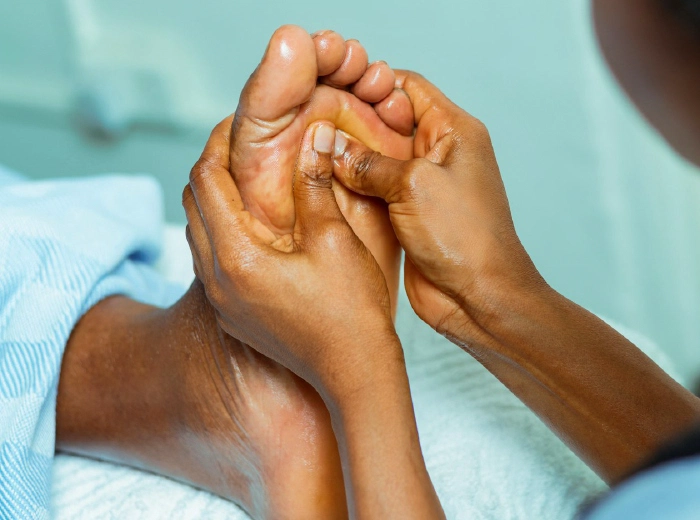
Before you buy anything, know this: your hands are the best foot massage tool in existence. You can feel what you’re doing, adjust pressure in real time, and reach every single part of the foot. Everything else is supplementary or just a convenience when your thumbs get tired.
The basic technique
Sit somewhere comfortable with one foot resting on the opposite knee. You want good access and a completely relaxed foot.
- Start with warming strokes: Use both palms to stroke the whole foot from heel to toe with moderate pressure. Thirty seconds of this warms up the tissue and tells your foot what’s coming. Don’t skip this part
- Thumb circles on the arch: Use both thumbs to make slow, overlapping circles along the entire arch from heel toward the ball of the foot. This is where most barefoot walkers hold the most tension. Don’t be shy with the pressure here, the arch can take it
- Heel work: Cup the heel in your palm and use your thumb to push small, firm circles around the heel pad and the edges where the plantar fascia attaches. This zone gets tight first and complains last
- Toe attention: Pull each toe gently, then rotate it in small circles. Do a slow side-to-side stretch. This restores the range of motion that gets lost even in barefoot walkers who aren’t specifically doing toe exercises
- Finishing strokes: End with light strokes from heel to toe, lighter than when you started. This signals to the nervous system that you’re done and it can settle
The whole sequence takes about five minutes per foot. Ten minutes total. Do this after a barefoot hike, after a tough gym session, or just before bed and watch what happens to your sleep quality.
Simple tools worth having
You don’t need a cupboard full of gadgets. These three things cover most situations:
Tennis Ball or Lacrosse Ball
Massage Stick or Roller
A Good Natural Oil
The ball roll: do this every morning
Before you get out of bed, place a tennis ball or hard ball on the floor next to your bed. Put your foot on it as you sit up. Roll slowly from heel to toe and back for about sixty seconds. Light pressure, just waking things up. Then stand up.
The difference is real. The plantar fascia that naturally tightens overnight gets gently mobilized before you load it with your full bodyweight. That stabbing first step in the morning that a lot of people brush off as normal? This is how you stop that from becoming a regular thing.
The zones that need the most attention
Not all parts of the foot need the same amount of work. These are the areas barefoot walkers typically need to prioritize, based on what actually sees the most load and tension:
The Plantar Fascia
The Heel Pad and Attachment Points
The Ball of the Foot
The Arches
When to massage, how often, and for how long
The honest answer is: more than you probably do now. Here’s a practical framework that actually fits into real life:
- Every morning (2 minutes): Ball roll, both feet. Do this before your first barefoot steps of the day. Mobilizes the plantar fascia that tightened overnight. Non-negotiable if you’re doing any serious barefoot activity
- After long barefoot sessions (10 minutes): Full hand massage, both feet. This is recovery. Same logic as stretching after a workout. You did the work, now let the tissue reset
- Before barefoot hiking or intense activity (5 minutes): Light warming massage to wake up the feet and increase blood flow before you put them to work. Especially useful in cold weather when tissue is stiffer
- Weekly full session (15-20 minutes): Take time to really work through everything. Oil, warmth, both hands, every zone. This is when you catch the small tight spots before they become a problem. The Brownies do it by moonlight apparently. A podcast works just as well
Foot Massage FAQs
Take care of what takes care of you
Your feet are the most overworked, under-appreciated parts of your body. They carry every pound of you across every surface you’ve ever walked. And if you’re reading this, you’ve probably asked even more of them than most people do.
The least you can do is spend ten minutes a few times a week running your hands over them with some actual care. No special skills required. No expensive equipment. Just you, your hands, and a bit of time.
You’ll feel it in your next walk. Your feet will wake up easier in the morning. And gradually, the small niggles and tightenings that used to just be background noise start to go quiet.
Foot strengthening builds the muscles. Massage keeps the whole system supple enough to do its job. They go together. That’s the whole thing.
Go take care of your feet.