Foot Strengthening
You work out your arms. Your legs. Your core. Maybe even your neck if you’re that dedicated. But your feet? The things that carry you everywhere, every day, with over 100 muscles each? You’ve probably never consciously exercised them once.
That’s about to change.
Here’s your complete foot strengthening routine, from couch potato feet to feet of steel.
Why foot strength matters
Your feet are the foundation of literally every movement you make while standing. When they’re strong, everything above them works better. When they’re weak, everything else has to pick up the slack. Here’s what strong feet give you:
- Better balance: Strong intrinsic foot muscles give you stability that no shoe technology can match. You’re more confident on uneven ground, in sports, and in daily life
- Less pain everywhere: Weak feet are behind a shocking amount of knee, hip, and back pain. Strengthen the foundation and the whole building gets more stable
- Injury prevention: Strong feet absorb impact better, adapt to terrain faster, and recover quicker. Fewer rolled ankles, fewer stress fractures, fewer overuse injuries
- Improved athletic performance: Every sport benefits from strong feet, running, climbing, martial arts, yoga, hiking, dancing. Your feet are the connection point between you and the ground
- Natural arch support: Forget orthotics. Strong foot muscles maintain your arches naturally. The way they were designed to work before shoes made them lazy
Beginner routine (weeks 1-4)
If your feet have been locked up in conventional shoes for years, start here. These exercises wake up dormant muscles without overwhelming them.
Daily Exercises (10-15 minutes)
- Toe spreads: Sit or stand barefoot. Spread all five toes apart as wide as possible. Hold 5 seconds. Release. Repeat 10 times. If your toes barely move, that’s normal, they’ll learn. This is THE foot exercise, the one that matters most
- Toe curls: Place a towel flat on the floor. Use your toes to scrunch it toward you. Reset and repeat 10 times per foot. Works the flexor muscles that have been sleeping for years
- Marble pickups: Scatter 20 marbles on the floor. Pick them up one by one with your toes and place them in a bowl. Sounds silly. Works amazingly well. Builds dexterity and grip strength
- Big toe isolation: Try to press your big toe down into the floor while lifting the other four toes. Then reverse, lift the big toe while pressing the others down. This is HARD at first. Your brain literally needs to relearn how to control individual toes
- Ankle circles: 10 circles each direction, each foot. Full range of motion. Maintains ankle mobility that supports foot function
Daily Practice
- Barefoot at home: Minimum 1-2 hours daily. Just being barefoot on hard floors activates foot muscles more than any shoe. Walk around, stand while cooking, pace while on calls
- Standing on one foot: 30 seconds per foot while brushing your teeth (that’s 4 minutes of balance training daily, built into something you already do). If 30 seconds is easy, close your eyes
Intermediate routine (weeks 5-12)
Your toes are moving, your balance is better, and you’re ready for more. Add these to your beginner exercises:
New Exercises
- Short foot exercise: Standing barefoot, try to “shorten” your foot by pulling the ball of your foot toward your heel WITHOUT curling your toes. You’re trying to raise your arch using only the intrinsic muscles. Hold 10 seconds, repeat 10 times. This is the gold standard for arch strength
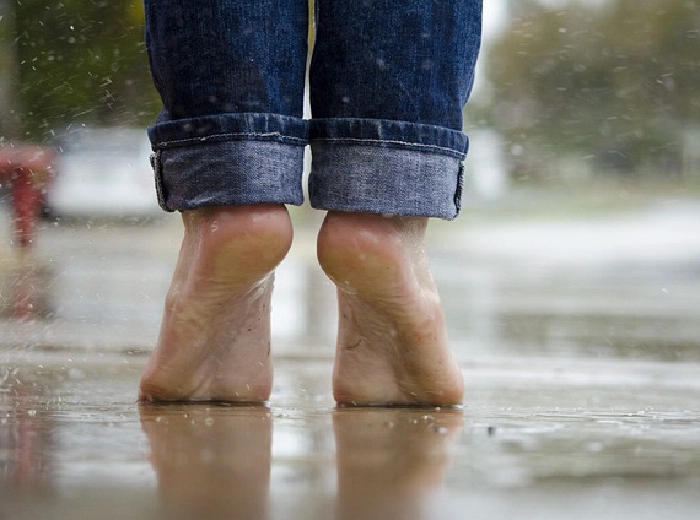
- Heel raises (barefoot): Stand barefoot, rise up onto your toes as high as possible, hold 2 seconds, lower slowly. 3 sets of 15. When this gets easy, do single-leg heel raises. When THAT gets easy, do them on a step so your heels drop below the platform
- Toe yoga: Lift your big toe while keeping all other toes down. Then press big toe down and lift the others. Alternate 10 times. This builds the independent toe control that shoe-wearing has erased
- Resistance band toe spreads: Loop a resistance band around all five toes. Spread them apart against the band. Hold 5 seconds, release. 3 sets of 10. Builds the abductor muscles that maintain proper toe alignment
- Walking on toes and heels: Walk on your toes for 30 seconds, then on your heels for 30 seconds. Repeat 3 times. Works all the major foot and lower leg muscles through different ranges
Terrain Training
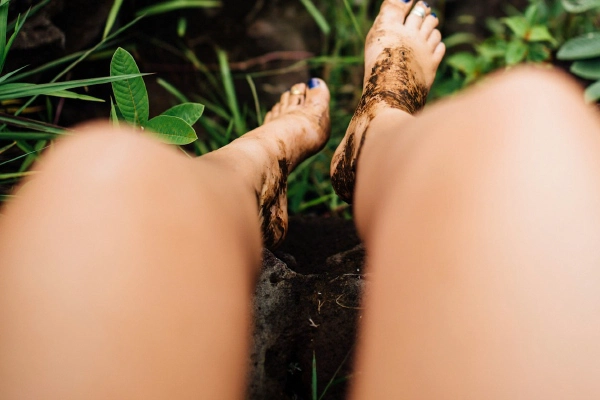
- Grass walking: 10-15 minutes barefoot on grass. The uneven surface provides constant micro-challenges that build stabilizer muscles
- Pebble walking: Find a pebbly surface (river bed, gravel path) and walk barefoot for 5-10 minutes. Intense stimulation that builds both strength and toughness. Start easy, your soles need time to adapt
- Sand walking: If available, walk on dry sand for resistance training and wet packed sand for a different challenge. Beach walks are basically foot gym sessions
Advanced routine (month 3+)
Your feet are noticeably stronger, your balance is solid, and you’re ready to go full send. These exercises build serious foot power:
Advanced Exercises
- Single-leg balance on unstable surfaces: Stand on one foot on a cushion, folded towel, or balance board. 60 seconds per foot, eyes closed. Your foot and ankle stabilizers work overtime. This is where real proprioception lives
- Barefoot calf raises on a step (single leg): One foot on a step edge, lower your heel below the step, then rise all the way up. 3 sets of 12 each foot. Eccentric loading + full range = serious Achilles and calf strength
- Foot doming drills: The short foot exercise but now while standing on one leg, then while walking. Try to maintain the dome (raised arch) with every step. This is what natural arch function looks like
- Barefoot agility: Lateral shuffles, quick direction changes, small jumps, all barefoot on grass. Builds reactive strength that your feet need for real-world terrain
- Rock walking: Find a rocky trail or river bed and walk barefoot for 10-20 minutes. This is the ultimate foot exercise, every step is different, every muscle has to adapt in real time. Start carefully and build duration
Lifestyle Integration
- Full-time minimalist shoes: If you haven’t already, transition to minimalist shoes for all activities. Your feet stay active all day, not just during exercise sessions
- Barefoot hiking: Start with easy trails, work up to rocky terrain. Nothing builds foot strength like navigating real nature barefoot. It’s the gym your feet were designed for
- Sports barefoot: If your sport allows it (yoga, martial arts, gym training), do it barefoot. Direct ground contact + athletic movement = accelerated foot development
The fire walk mentality
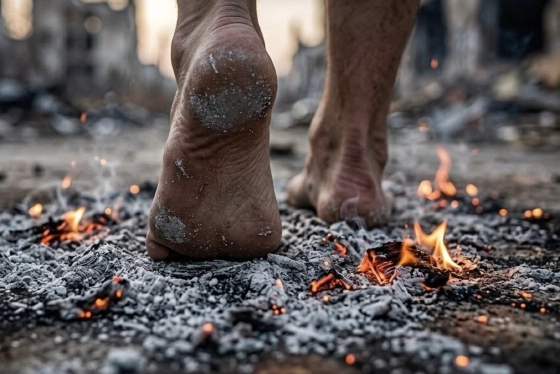
There’s a reason firewalking has been a ritual of strength and courage across cultures for thousands of years. We’re not telling you to go walk on hot coals (please don’t), but the principle behind it is everything: your feet are capable of WAY more than you think.
When you’ve been doing the exercises, building strength, toughening your soles on natural terrain, you reach a point where surfaces that once seemed impossible feel completely manageable. Gravel that used to make you wince becomes comfortable. Rocky trails that had you tiptoeing become enjoyable. That’s the fire walk mentality: training past your perceived limits until what once scared you becomes second nature.
The strength timeline
Foot strengthening is a journey. Here’s roughly what to expect if you stay on it:
- Week 1-2: Your feet will be sore. Muscles you didn’t know existed will remind you they exist. This is normal. It’s like starting any new exercise program
- Week 3-4: Soreness fades. You start feeling more stable. Toes begin to spread more naturally. Balance improves noticeably
- Month 2: Foot muscles are visibly more defined (yes, really). Arch strength improves. You’re comfortable barefoot on surfaces that used to feel impossible
- Month 3: Significant balance improvements. Reduced foot, knee, and back pain (if you had any). You start choosing barefoot or minimalist shoes by preference, not just principle
- Month 6: Your feet look different, wider toe splay, visible muscle tone, healthier alignment. People who knew you before might comment on your posture improvement
- Year 1: Full adaptation. Your feet are genuinely strong, capable, and resilient. The difference from where you started is dramatic. Going back to rigid shoes feels like putting your feet in casts
Patience is everything here. You didn’t wreck your feet in a week. You won’t rebuild them in a week either.
Foot Strengthening FAQs
Your feet are ready. Are you?
Every day you spend in rigid shoes without working your feet is another day of slow decline. And every day you spend doing even 10 minutes of foot work is money in the bank of long-term mobility.
You don’t need a gym membership. You don’t need equipment. You don’t need a coach. You just need bare feet, some floor space, and a little consistency. Start with the beginner stuff today. Literally right now. Take your shoes off and spread your toes. That’s step one. And if you want the full picture on making your home the best training ground your feet have ever had, read the barefoot at home guide.
Your feet carried you through every single day of your life. It’s time to return the favor.
And hey, if you’re into lifting at the gym, check out why serious athletes are ditching their shoes for squats and deadlifts. Turns out strong feet and strong lifts go hand in hand.
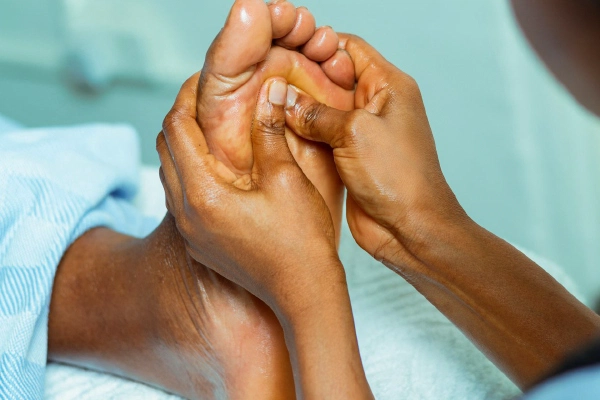
Once you’ve got a solid strengthening routine going, add foot massage to the mix. Strong feet still need maintenance, and massage keeps the whole system supple enough to keep building.