Foot Reflexology
Picture this: every inch of your foot connects to something else in your body. Your heel talks to your lower back. The ball of your foot has a direct line to your heart and lungs. Your toes are basically a helpline to your brain and sinuses. It sounds wild. But reflexology has been saying exactly this for thousands of years, and the barefoot life? It’s the most natural reflexology session you could ever give yourself.
Every barefoot step on real ground is your whole body getting a little tune-up.
What reflexology actually is
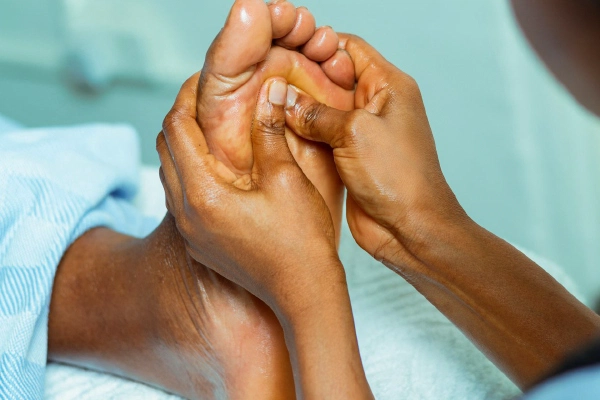
Reflexology is the practice of applying pressure to specific points on the feet (and sometimes hands and ears) that correspond to different organs, systems, and parts of the body. It’s been around for thousands of years, showing up in ancient Chinese medicine, Egyptian wall paintings, and Native American healing traditions. Basically every major culture that walked barefoot figured out that the foot is way more than a transportation device.
The idea is straightforward: your body is mapped across the soles of your feet. Right foot covers the right side of your body. Left foot covers the left. The toes represent your head. The arch connects to your spine and digestive organs. The heel talks to your lower back, hips, and sciatic zone. Stimulate a zone, send a signal to the corresponding body part.
Is It Proven Science?
Honest answer: reflexology sits in the interesting space between ancient wisdom and modern research. There’s no complete scientific consensus on the mechanism, but there’s solid evidence that foot massage and pressure therapy directly affect the nervous system, circulation, and stress response. Multiple studies show reflexology reduces anxiety, improves sleep quality, and helps with pain management.
Whether you believe the zone map is literal or metaphorical almost doesn’t matter. The feet are packed with nerve endings, over 7,000 in each foot. Stimulating them does real, measurable things to how you feel. That’s not magic. That’s just good sensory biology.
The main zones and what they connect to
You don’t need to memorize a complicated chart to get started. Here are the key areas worth knowing:
Toes: Head & Brain Zone
Ball of Foot: Heart & Lungs
Arch: Digestive Zone
Inner Arch: Spine Zone
Heel: Pelvic & Lower Back Zone
Outer Edge: Arms & Shoulders
Walking barefoot is reflexology in motion
Here’s where the barefoot lifestyle and reflexology snap together in a way that makes your brain light up: every time you walk on natural, varied terrain, you’re running an unscripted reflexology session. No appointment needed.
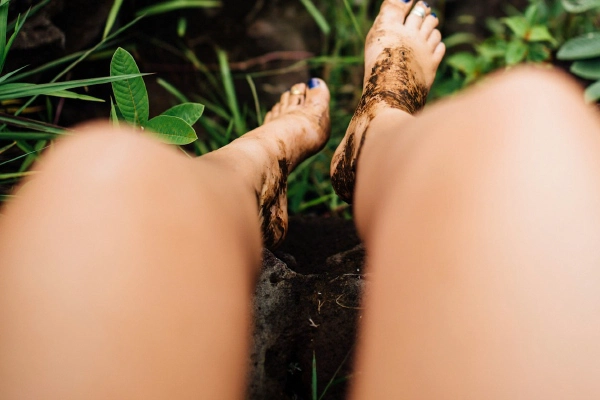
Think about what happens when you walk on different surfaces: forest floor, pebble paths, wet grass, sand. Every bump, texture, and pressure point is contacting a different zone on your sole. The pebble path that feels like a foot massage? That’s reflexology. The forest floor roots and pine cones that make you step with intention? Reflexology. The ocean-floor stones you navigate gingerly in shallow water? A full session.
This is why connecting earthing and grounding with reflexology makes so much sense. You’re not just absorbing electrons. You’re activating every zone on that map with every step on natural ground. The Brownies, those barefoot forest creatures who’ve been walking this earth longer than memory serves, have known this deep-footedness forever. We’re just catching back up.
DIY reflexology you can try right now
You don’t need to book a therapist to get started. Here’s your no-frills starter kit:
- Thumb walking: Use your thumb tip to creep slowly across your entire sole, bit by bit. When you hit a tender or zingy spot, stay there and apply gentle pressure for 5-10 seconds. Tender zones often correspond to areas in the body asking for attention
- Golf ball roll: Place a golf ball or lacrosse ball on the floor and roll your entire sole over it slowly. Work heel to toe, spending extra time on the arch. Covers more ground than thumb work and feels properly good
- Toe work: Take each toe between your fingers, rotate it gently, then give it a slight pull and release. Finish with a gentle squeeze at the tip. This stimulates the head/sinus zone and also helps with toe mobility and separation
- Barefoot pebble walking: Find a smooth pebble path in a park or on a beach, and walk it slowly and intentionally. This is reflexology by terrain. No tools, just feet and earth
- Cold water finish: A cold foot bath or splash after a barefoot session activates circulation through the whole reflex map and doubles as a great recovery tool
Combine any of these with a few minutes of foot strengthening exercises and you’ve got a full foot health routine that covers both structure and sensation.
Real benefits, not hype
Whether you’re doing formal reflexology or just walking barefoot on textured terrain, here’s what you’re getting:
- Stress and anxiety reduction: Foot massage activates the parasympathetic nervous system, your “rest and digest” mode. Studies consistently show reflexology reduces cortisol and reported stress. Your nervous system actually calms down, measurably
- Better sleep: The stress-reduction effect translates directly to sleep quality. Many people find a short reflexology session before bed helps them fall asleep faster and sleep more deeply
- Improved circulation: The pressure-and-release action pumps blood through your capillaries more efficiently, improving circulation throughout your legs and upward
- Digestive support: The arch stimulation from reflexology and barefoot walking on varied terrain keeps the digestive reflex zone active. Many people notice less bloating and more regular digestion with consistent practice
- Headache and tension relief: Working the toe zones, especially the big toe pad and the area just beneath the toes, releases head and neck tension surprisingly effectively
- Energy boost: A 15-minute reflexology session often leaves people feeling more switched-on than before. Whether it’s circulation, nervous system reset, or something more subtle, the effect is real and repeatable
Why the barefoot life is the best reflexology program
Here’s what clicked for us: you can book a weekly reflexology appointment and get real benefit. But if you’re also living the barefoot life, your feet are getting something similar every single day, just from how you interact with the world.
The barefoot transition isn’t just about foot strength and posture. Every step you take when your feet hit natural terrain without a rubber sole insulating them is a reflexology interaction. Varied ground textures are doing live work on your reflex map. The foot massage practices you add at home stack on top of that.
This is why people who commit to barefoot living often report improvements that feel out of proportion to just “walking without shoes.” Better sleep, digestion, energy, stress levels. They’re not imagining things. They’ve accidentally built the world’s most natural daily reflexology practice.
Formal sessions are still worth it. A trained therapist finds things your daily barefoot walking might miss, and the intentional attention is powerful on its own. But the combination of professional sessions with barefoot daily life? That’s the real sweet spot.
Reflexology FAQs
Your feet have been trying to tell you something
Reflexology is one of those things that seems fringe until you actually try it and notice the effects. And when you combine it with a barefoot lifestyle, the effects compound in ways that are hard to explain but very easy to feel.
Your feet aren’t just the things at the end of your legs that keep you upright. They’re a whole communication system, sending signals about your health, your stress, your posture, and your wellbeing with every single step. Every time you take your shoes off and let those feet actually touch the world, you’re giving that system permission to do what it was built to do.
The zone map is there. The nerve endings are ready. The ground has been waiting your whole life.
Take your shoes off and go have a conversation.
Dig deeper into the barefoot world:
- Foot massage techniques: the hands-on guide to DIY foot care
- Walking on different surfaces: the natural reflexology tour
- Foot strengthening exercises: build the foundation under the map
- Earthing and grounding: why your feet love natural ground
- Toe separation: free every single zone